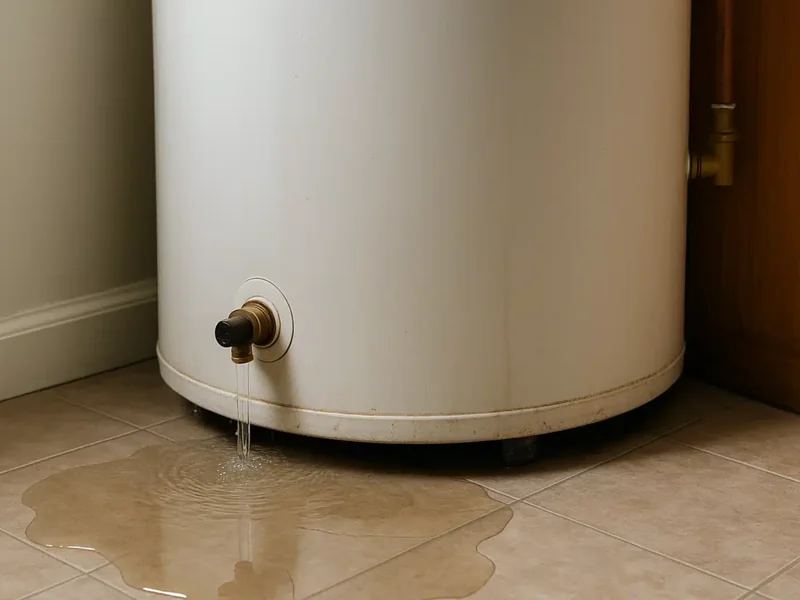
When a water heater starts leaking, the minutes before help arrives are the ones that decide whether you mop up a puddle or rip out soaked drywall. Shutting the heater down properly — water in, fuel or power, and the tank itself — stops the damage from compounding. This guide walks through the exact steps for gas and electric heaters, where the shutoffs hide in a typical Medford basement, and the mistakes that make a bad situation worse.
Step 1: Stop the Water Feeding the Leak
Find the cold-water inlet pipe going into the top of the heater — it usually has a valve (gate, ball, or wheel handle) within a foot or two of the tank. Turn it clockwise to close it. This stops new water from entering the tank, which stops most leaks from getting worse.
If that valve is seized — common on heaters that haven't been serviced in years — go to the house's main water shutoff instead. In Medford homes that's typically in the basement near where the water line enters through the foundation wall, or in a utility closet. Every adult in the house should know where this valve is before an emergency; finding it while water spreads across the floor is the wrong time to learn. This is core what to do when your water heater leaks knowledge.
Step 2: Kill the Heat Source
A water heater that's still firing with a dropping water level can overheat, warp, or — in extreme cases — become dangerous. Shut it down:
- Gas heaters: turn the gas control valve on the unit to OFF or PILOT. If you smell gas strongly, don't touch anything electrical — leave the house and call the gas utility from outside, then call us.
- Electric heaters: go to the breaker panel and flip the water heater's dedicated breaker (usually a double-pole 30-amp) to OFF. Don't just turn down the thermostat — kill the power.
Never drain a tank that's still heating. An electric element exposed to air burns out in seconds; a gas burner firing on a near-empty tank can damage the tank and create a scalding steam hazard.
Step 3: Relieve Pressure and Contain the Water
Open a hot-water faucet somewhere in the house — a laundry tub or upstairs sink works well. This breaks the vacuum so the tank can drain later, and it relieves pressure in the lines. Then contain what's already escaped: towels around the base, a wet-dry vacuum if you have one, and move anything stored near the heater (boxes, paint cans, holiday decorations — the classic basement clutter) away from the water.
If the leak is heavy, attach a garden hose to the drain valve and run it to a floor drain to get water out of the tank in a controlled way. But only do this after the heat source is off.
Where Medford Basements Hide the Shutoffs
Older Medford homes have quirks worth knowing. The water heater's inlet valve may be behind a finished basement wall with only a small access panel. The breaker panel might be labeled by a previous owner in pencil — verify the heater's breaker now, not during a leak, by flipping it and confirming the heater's indicator goes dark. Gas shutoff valves on older installations sometimes need a wrench rather than a hand turn. A five-minute reconnaissance of your own basement this weekend is the cheapest insurance in this entire guide.
Renters: know where the main shutoff is, but don't attempt repairs on a landlord's appliance — shut things down, document with photos, and notify the landlord immediately.
What NOT to Do During a Heater Emergency
- Don't keep using hot water. Every gallon you draw pulls a gallon of cold into a leaking tank.
- Don't plug the TPR valve's discharge pipe. If the temperature-pressure relief valve is the thing leaking, it's doing its job — capping it can turn a leak into a rupture.
- Don't touch water near an electric heater. If water has reached the heater's electrical compartment or the breaker panel area, stay out of the water and call an electrician along with us.
- Don't restart the heater after shutting it down until a professional has found the leak's source.
Knowing whether a leak is a true emergency helps you calibrate — but when in doubt, shut it down and call. A false alarm costs a service visit; a missed emergency costs a basement.
After the Emergency: What Happens Next
Once the heater is shut down and the water is contained, the next step is diagnosis. A tech will determine whether the leak is from a fitting or valve (usually repairable), the tank itself (replacement), or something like a failed expansion tank over-pressurizing the system. Take photos of the leak and any water damage for your records before cleanup is complete. Then call (833) 713-2101 — we'll find the source and tell you straight whether it's a repair or a replacement.
Practice the Shutoff Before an Emergency
The worst time to learn where your shutoff valves are is while water spreads across the basement floor. Do a dry run on a calm Saturday: find the cold-water inlet valve above the heater, the main house shutoff, and the gas valve or electrical breaker for the unit. Tag each one with a luggage tag or a strip of bright tape labeled in plain words — “WATER HEATER INLET,” “MAIN WATER,” “HEATER GAS.” Then make sure every adult in the house can find and operate them.
Old gate valves deserve special attention. Give each one a gentle test turn twice a year; valves that never move seize, and a seized valve discovered during a leak is no valve at all. If a handle is already frozen or crumbles, have it replaced on a scheduled visit — not at 2 a.m. Keep a flashlight within reach of the heater, because Medford basement breakers and valves love to hide in the darkest corner.
Medford-Specific Shutoff Challenges
Medford's older housing stock creates shutoff headaches you won't find in newer suburbs. Original gate valves from the 1950s–60s are common, and their handles snap off if forced — turn gently, and if it won't budge, go to the main instead. In triple-deckers and two-families, the main water shutoff often serves every unit, so shutting it down affects your neighbors; know which valve isolates just your heater's feed versus the whole building.
Basement apartments and finished basements add another wrinkle: shutoffs get boxed behind drywall or buried behind storage. If yours is inaccessible, that is a problem to fix before an emergency, not during one. And know where your street shutoff is — the curb box near the sidewalk — because when an indoor main valve fails, the street valve is the last resort. A quick call to the city water department can confirm its location for your address.