Most water heater problems develop slowly. A drain valve drips for weeks. An anode rod depletes over years. But some failures arrive all at once: a tank seam lets go in the middle of the night, a supply line bursts during a January freeze, or a homeowner walks into the basement to find an inch of water spreading toward the furnace. Those are the calls this service exists for, and they cannot wait for business hours.
An emergency water heater leak is defined by damage in progress. Forty to fifty gallons of stored water, plus an open supply line feeding the tank at full household pressure, can put a remarkable amount of water into a home in a very short time. In Medford, where the majority of tank heaters sit in basements, that water often goes unnoticed for hours: it pools on concrete, wicks into stored belongings and finished walls, and finds the lowest point in the house, which is frequently near the electrical panel, the furnace, or a sump pit.
We provide emergency water heater leak repair throughout Medford, MA 02155. The priority on every emergency call is the same: stop the water, make the heater safe, find exactly where the leak is coming from, and either repair it on the spot or stabilize the situation until a permanent fix is in place. Below is what counts as an emergency, what to do before we arrive, how the repair visit works, and the safety rules that govern this kind of work.
What Counts as a Water Heater Emergency
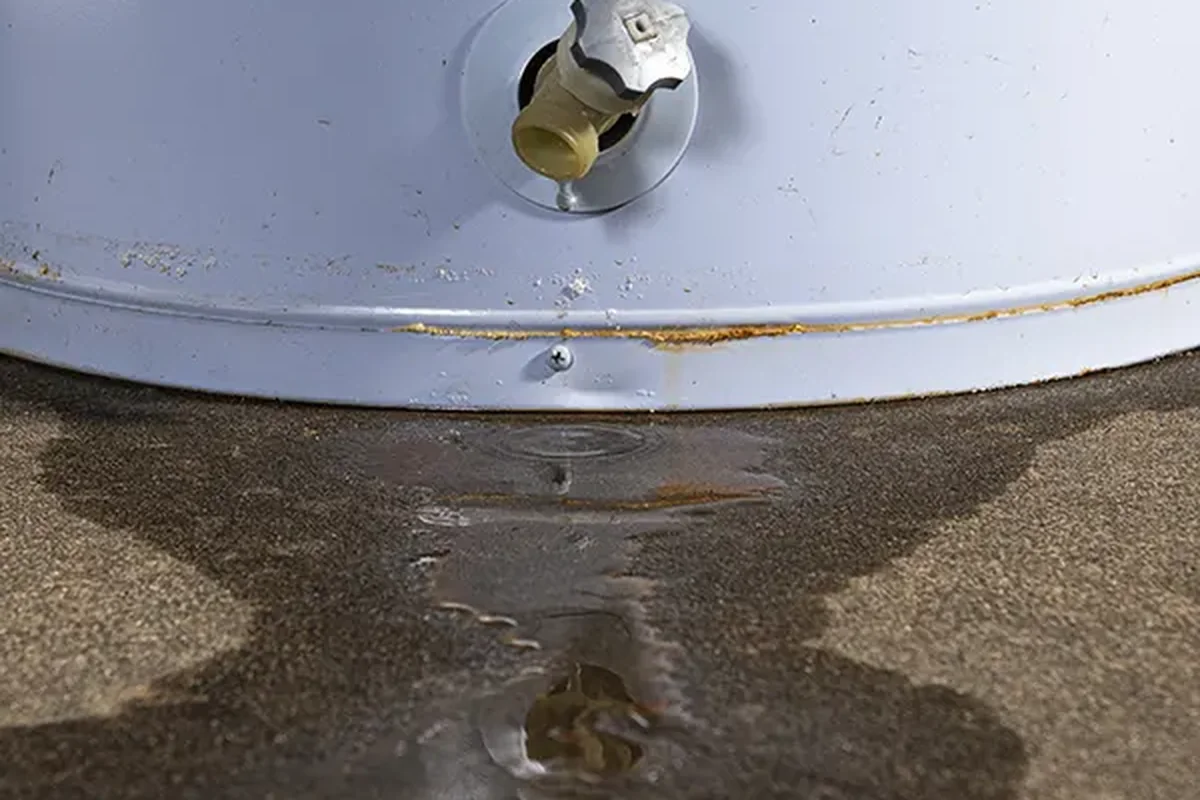
Not every drip is an emergency, but several situations clearly are. The most urgent is a burst or ruptured tank: water pouring or spraying from the tank body itself, often with rust-colored discoloration. A ruptured tank cannot be patched; the visit focuses on stopping the water, draining the tank, and arranging replacement. Closely related is active flooding from any source, a supply line, a failed connection, a split fitting, where water is spreading across the floor faster than it can be contained.
A gas odor near the water heater is an emergency of a different kind and outranks the water concern entirely. If you smell the rotten-egg odorant added to natural gas, the response is to leave the area, avoid operating switches or appliances, and call for help from a safe location. Do not try to find the leak yourself and do not attempt to relight the heater.
Other urgent scenarios include water near electrical components, a leak spraying onto the burner assembly or pooling around an electric heater's wiring, no hot water during freezing weather, when a failed heater leaves pipes vulnerable to freezing, and a temperature-pressure relief valve discharging continuously, which signals dangerous pressure or temperature inside the tank. A slow, contained drip from a drain valve, by contrast, can usually be managed by closing the supply valve and scheduling a prompt but non-emergency visit.
What to Do Before We Arrive
The minutes before a technician arrives matter enormously. If you discover an active leak, work through these steps in order, skipping any step that is not safe in your situation:
- Shut off the cold-water supply to the heater. There is a shutoff valve on the cold-water line entering the top of the tank. Turning it clockwise stops fresh water from feeding the leak. If that valve is seized or missing, shut off the home's main water valve instead.
- Shut off the fuel or power. On a gas heater, turn the gas control knob to the off position. On an electric heater, switch off the dedicated breaker at the panel. Do not reach through standing water to operate electrical controls.
- Relieve pressure if it is safe. Opening a hot-water faucet somewhere in the house lets pressure bleed off and can slow the leak. Do this only if you can reach a faucet without wading through water near the heater.
- Contain what you can. Move valuables, electronics, and stored items away from the water. Towels and buckets help with small leaks; for major flooding, focus on protecting belongings rather than fighting the water.
- Do not touch electrical equipment in wet areas. Keep clear of outlets, the electrical panel, and any appliances standing in water. If water is approaching electrical equipment, leave the area.
- If you smell gas, leave immediately. Do not operate light switches, do not use the phone inside, and do not try to ventilate by opening windows on your way out. Call from outside.
Then call (833) 713-2101. Tell us what you see: where the water is coming from, how fast it is spreading, whether the heater is gas or electric, and whether you were able to shut off the water. That information determines what we bring and how fast we move.
How an Emergency Repair Visit Works
An emergency visit has a different rhythm from a scheduled repair. Speed matters, but guessing wrong about the leak source wastes the time that speed bought. Our technicians work through a fixed triage sequence on every emergency call.
First, the water stops. If the homeowner has not already closed the supply valve, we do it on arrival, then verify the fuel or power is off. With the inflow stopped, the situation is contained and the diagnosis can proceed without the leak getting worse while we work.
Second, the source is identified. Everything is dried, and then we watch. Water appearing at a threaded connection, a valve, or a supply line points to a repairable fitting failure. Water seeping from the tank jacket, rust streaks running down from a seam, or moisture with no visible fitting source points to internal tank failure. The temperature-pressure relief valve's discharge pipe is checked, because a continuously discharging relief valve indicates a pressure or temperature problem that must be resolved regardless of the leak.
Third, the heater is made safe and the water is removed. The tank is drained through the drain valve or relief port, standing water is extracted, and the area is made safe to work in. Only then does the repair or replacement decision get made: fittings and valves are repaired on the spot with replacement parts from the truck, while a failed tank is drained, disconnected, and scheduled for replacement, with the water supply left safely isolated in the meantime.
The equipment on an emergency call reflects this sequence: pipe wrenches and fitting stock, replacement valves and connectors, Teflon tape and pipe joint compound, heavy-duty hoses, a wet-dry vacuum and a portable pump for standing water, and leak-detection tools for tracing the exact origin of the water.
Safety Rules for Emergency Leak Work
Emergency water heater work combines three hazards at once: water, heat, and either gas or electricity. Our safety rules for these calls are strict and non-negotiable. No technician works on a heater that is still energized or still firing; fuel and power are verified off before diagnosis begins. Around gas heaters, every joint that is disturbed is leak-tested with detection solution before the heater is returned to service, and any gas odor reported by the homeowner is treated as a gas emergency first and a water heater problem second.
Electrical safety gets special emphasis because emergencies so often involve water on the floor. Standing water and electricity are a lethal combination, which is why the rule is absolute: never operate breakers, switches, or the heater's controls while standing in water, and never touch electrical equipment that water has reached. If flooding has reached the electrical panel or outlets, the area is treated as an electrical hazard until the power is cut at a dry, safe location.
Scalding is the third hazard. A recently failed tank still holds water hot enough to cause serious burns, and draining it in a hurry, through a makeshift path, without securing the hose, is how injuries happen. Discharge water is always directed to a safe drain point, hoses are secured against whipping loose, and nobody works in the path of draining water. Finally, the temperature-pressure relief valve is never capped, plugged, or bypassed, not even temporarily. It is the tank's last line of defense against catastrophic pressure buildup, and defeating it turns a repairable failure into a dangerous one.
Why Emergencies Hit Medford Homes Hard
Medford's housing and climate shape water heater emergencies in recognizable patterns. The housing stock, much of it built from the early 1900s through the postwar decades, means a large share of local heaters are installed in basements that were never designed as mechanical rooms: low ceilings, no floor drain near the heater, and the unit tucked into a corner behind stored belongings. A leak in that setting can run for hours before anyone notices, which is why we find some of our worst water damage in homes where the heater was simply out of sight.
Triple-deckers add a multiplier. A single basement heater may serve multiple units, and a failure affects every household above it, which turns a maintenance issue into a multi-family emergency. Shared utility spaces also mean the shutoff valves are sometimes unfamiliar to the person who discovers the leak, a tenant rather than the owner, which is one more reason the main water shutoff location is worth knowing in advance.
Winter is the other local driver. New England freeze cycles punish water heaters in unheated or poorly heated spaces: supply lines freeze and split, and the damage reveals itself as a major leak when the thaw comes. Power outages during winter storms create the same sequence, the heater goes cold, pipes freeze, and the leak appears hours later when power returns. MWRA water itself is soft and relatively easy on tanks, but age is the great equalizer: the many heaters in Medford running past their twelfth or fifteenth year are living on borrowed time regardless of water chemistry. Serving Medford, MA 02155, we treat every emergency call as a race against water damage, because in a basement install, the water always wins if it gets a head start.
Frequently Asked Questions
Emergency Water Heater Leak Repair in Medford, MA
Water spreading across your floor right now? Shut off the water and fuel supply to the heater if you can do so safely, then call (833) 713-2101. We provide emergency water heater leak repair throughout Medford, MA 02155.
(833) 713-2101Call Now