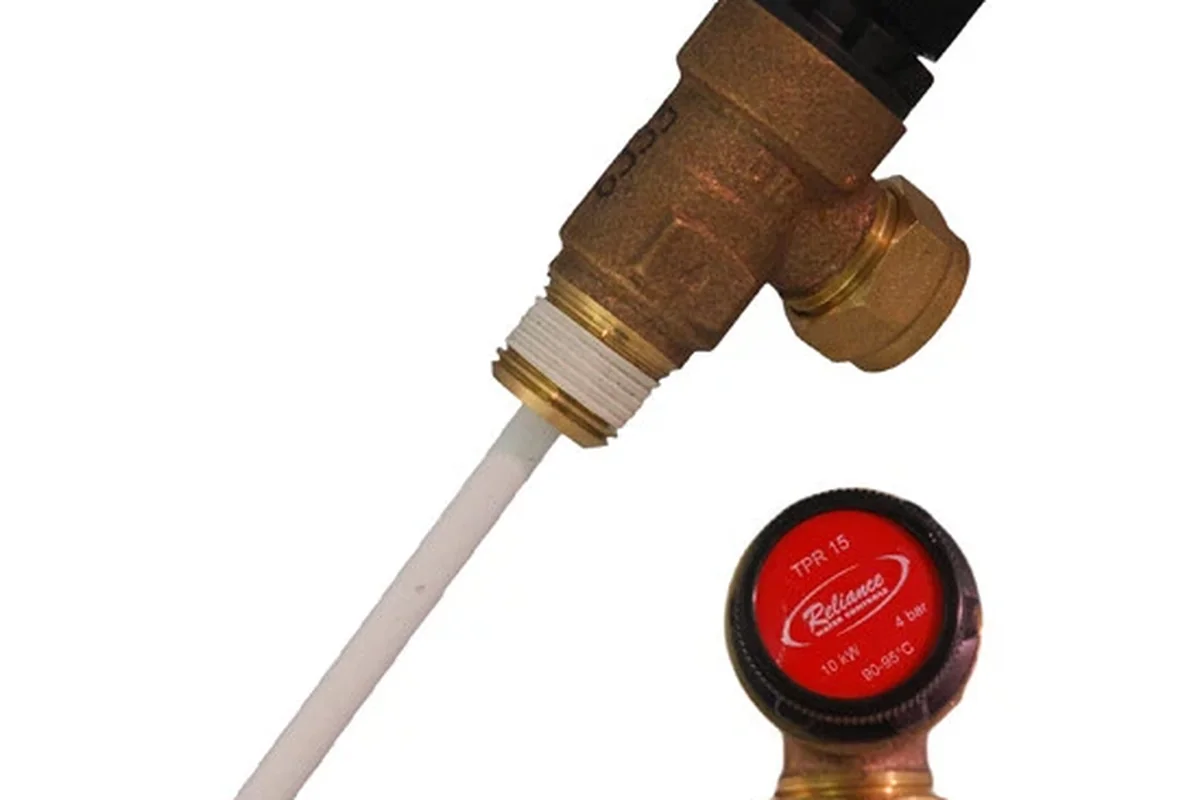
['The temperature and pressure relief valve — the TPR valve — is the most important safety device on your water heater and the one most homeowners never think about. Its job is simple and vital: if water temperature or pressure inside the tank climbs toward dangerous levels, the valve opens and releases water, preventing the tank from becoming a pressure vessel with no escape. When a TPR valve starts dripping from its discharge pipe, it is communicating — either the valve itself has worn out, or the system is pushing it to open for a reason.', 'That drip is never something to cap, plug, or ignore. A weeping valve might indicate nothing more than an aging spring, or it might be the visible symptom of thermal expansion on a closed plumbing system, excessive incoming water pressure, or a thermostat letting the tank overheat. Telling those scenarios apart is the real work of a TPR service visit — the valve replacement itself is straightforward, but the diagnosis behind it is what keeps your home safe.', 'This page explains how to recognize a failing TPR valve, what causes failure, the replacement procedure step by step, the discharge-piping rules that matter, the safety principles behind them, and the Medford-specific conditions — from high municipal water pressure to freezing discharge lines — that affect these valves locally.']
Recognizing a Failing TPR Valve
A healthy TPR valve sits silent for years. When it starts making itself known, the signs are usually visible at the end of the discharge pipe — the pipe running from the valve down toward the floor.
Signs your TPR valve needs attention:
- Steady dripping from the discharge pipe. The most common symptom: a slow, persistent drip or a small puddle forming where the pipe terminates.
- White mineral crust at the pipe's end. Dried deposits prove the weeping has been happening longer than you realized.
- Water stains or rust on the floor beneath the pipe. Chronic discharge leaves its mark on concrete and paint alike.
- The test lever will not reseat. After a function test, the valve keeps dribbling instead of snapping shut — the seat is worn.
- Corrosion on the valve body. Rust or green oxidation on the brass body suggests age and internal deterioration.
- Discharge after heavy hot-water use. Weeping that follows showers or laundry points toward thermal expansion rather than a dead valve.
- Strong discharge with very hot water. A valve blowing off forcefully, especially with steaming water, signals dangerous overpressure or overheating — treat as urgent.
The causes behind these symptoms fall into two groups. The first is the valve itself: springs weaken, seats corrode, and mineral deposits prevent full closure after years of heat cycles. The second group is systemic: thermal expansion on a closed plumbing system (one with a pressure-reducing valve or check valve and no expansion tank) forces the TPR to relieve pressure every heating cycle. Excessive incoming water pressure — anything sustained above 80 psi — does the same. A thermostat stuck in the heating position drives temperature up until the valve's thermal element trips. Sediment or debris lodged under the seat prevents sealing.
Distinguishing a worn valve from a systemic cause is the critical diagnostic step. Replacing the valve without addressing thermal expansion just produces a new valve that weeps like the old one — a frustrating and entirely avoidable outcome.
The TPR Replacement Procedure, Step by Step
TPR valve replacement is a compact job with outsized safety importance. Here is the standard professional sequence:
Step 1: Shut down the water heater
The cold water inlet valve is closed, and the heater is shut down — breaker off for electric, gas control turned off for gas units. The tank needs to be neither heating nor pressurizing while the safety device is removed.
Step 2: Relieve pressure and cool down
A hot-water tap is opened to relieve system pressure, and the tank is allowed to cool if it has been overheated. Working on a fully pressurized, scalding tank is how injuries happen; patience here is protective.
Step 3: Drain below the valve level
Using the tank's drain valve and a hose, water is drained until the level sits below the TPR valve's tapping — usually near the top of the tank, so only a small amount needs draining. A bucket catches the remainder.
Step 4: Remove the old valve
With a pipe wrench on the valve body (never on the discharge piping alone), the old valve is unthreaded from the tank tapping. The threads are inspected for damage or corrosion, and the tapping is cleaned.
Step 5: Install the new valve
Thread sealant tape or pipe joint compound is applied to the new valve's threads, and it is threaded in and tightened to a proper seal. The replacement must carry the correct ratings — 150 psi and 210 degrees Fahrenheit for standard residential tanks — and be sized to the tank's tapping.
Step 6: Inspect and correct the discharge piping
This step is as important as the valve itself. The discharge pipe must be full size (no reductions), run downward by gravity, terminate near the floor in a visible location, and have no threads, caps, or shutoff valves at its end. Deficiencies found here are corrected as part of the visit.
Step 7: Refill, restart, and test
The tank is refilled with air purged through the hot taps, the heater is restarted, and the system is brought to temperature. The new valve is function-tested with a brief lever lift, then watched through a heating cycle to confirm it seats fully and the weeping has stopped.
Parts and Tools for TPR Valve Replacement
The parts list for TPR replacement is short — but every item must be correct, because this is life-safety equipment:
- New TPR valve — rated 150 psi and 210 degrees Fahrenheit, with the correct thread size and shank length for the tank. The rating tag must be present and legible.
- Pipe wrench — sized to grip the valve body without crushing it.
- Thread sealant tape or pipe joint compound — rated for hot-water service, applied to male threads only.
- Discharge pipe and fittings — typically copper or CPVC, full pipe size, for correcting deficient discharge runs.
- Garden hose and bucket — for the partial drain-down.
- Water pressure gauge — threaded onto a hose bib or laundry tap to check static system pressure, the key diagnostic for expansion-related weeping.
- Thermometer — to verify the tank is not overheating, which would implicate the thermostat rather than the valve.
Notice what is not on the list: caps, plugs, or valves for the discharge pipe. Those parts have no legitimate place in a TPR installation, and a technician who finds them removes them.
Safety Rules That Govern TPR Work
The TPR valve is a safety device, so its safety rules are stricter than those for ordinary plumbing repairs:
- Never plug, cap, or valve the discharge pipe. This bears repeating because it is the single most dangerous homeowner mistake. A water heater with a blocked relief path can rupture catastrophically.
- Depressurize before removing the valve. Unthreading a TPR valve from a pressurized tank can launch the valve like a projectile and release scalding water.
- Let overheated tanks cool first. If the valve has been blowing off from overheating, the water inside may be near boiling. Cooling time is not optional.
- Test the lever briefly, not repeatedly. A quick lift-and-release confirms function. Repeated yanking wears the seat and can turn a good valve into a weeping one.
- Stand clear during testing. Discharge water can be scalding. Keep hands, face, and feet away from the pipe's termination point.
- Diagnose active blow-off before replacing. If the valve is discharging strongly, find out why — overheating thermostat, failed expansion control — before installing a new valve into the same dangerous conditions.
- Verify ratings on the replacement. An underrated valve may not open when needed; an oversized or mismatched valve may not seat in the tapping. The tag tells the truth — read it.
These rules exist because the TPR valve is the last defense. Every shortcut around it trades a small convenience for a real, documented hazard.
Medford Conditions That Affect TPR Valves
Medford's water system and housing stock create specific TPR valve issues that a generic guide would miss.
High municipal pressure in low-lying areas. Medford's water arrives through the MWRA metropolitan distribution system, and in lower-elevation neighborhoods the static pressure can run high — sometimes above the 80 psi threshold where plumbing components start to suffer. Many homes have pressure-reducing valves at the meter to tame it, but a PRV creates a closed system: when the water heater fires, expanding water has nowhere to go, and the TPR valve becomes the pressure escape. Without an expansion tank, that valve weeps after every heating cycle. This is the single most common systemic cause of chronic TPR dripping in the Boston metro.
Older tanks with original valves. The triple-deckers of South Medford and the capes and colonials of West Medford and the Hillside often run water heaters that are 10 to 15 years old — with the original TPR valve still threaded into the tank. A decade of heat cycles weakens springs and corrodes seats, so age-related weeping is widespread in these homes.
Discharge lines that freeze. Some Medford installs route the TPR discharge pipe to the exterior or through unheated spaces. In January, a discharge line can freeze shut — and a frozen discharge line is functionally identical to a capped one: the valve cannot relieve. Proper installs terminate the discharge indoors, near the floor, in a visible location, and any exterior routing found during a visit gets flagged as a hazard.
Finished basements raise the stakes. As Medford homeowners finish basements into living space, water heaters increasingly sit above or adjacent to finished rooms. A TPR discharge event in that setting causes real damage, which makes correct discharge-pipe termination — visible, near the floor, directed away from finished surfaces — more important than ever.
Winter overheating from stacked controls. During the heating season, some households nudge water heater temperatures up to compensate for cold inlet water. Combined with an aging thermostat, that nudge can push tank temperatures toward the TPR's thermal trip point. The valve opens, the homeowner sees the drip, and the real culprit is the temperature setting — another reason diagnosis precedes parts-swapping.
TPR Valve Questions From Medford Homeowners
The questions below address what Medford homeowners most often ask about TPR valves — when a drip is an emergency, why new valves sometimes still weep, and what the discharge pipe rules really require. If your valve is discharging actively right now, do not wait for an answer here: call (833) 713-2101 and describe what you see.