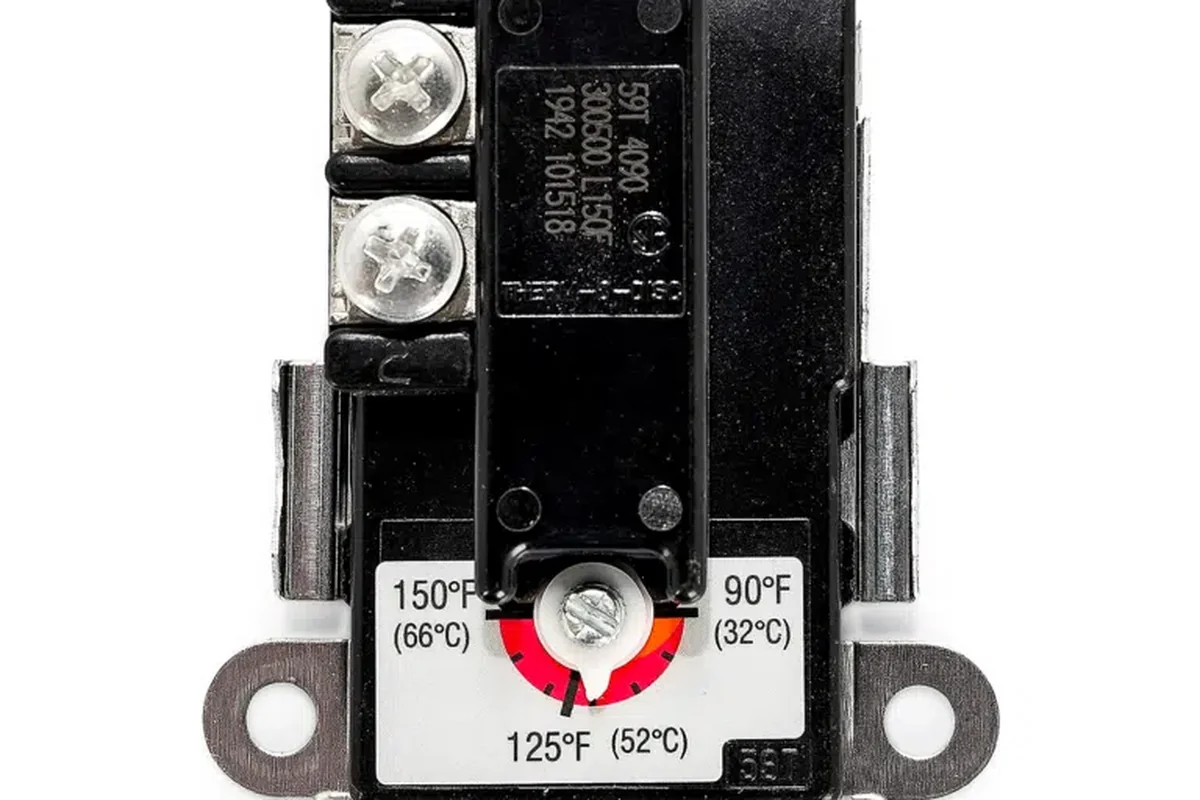
["The thermostat is the brain of your water heater's heating cycle — the small device that decides when the elements fire and when they rest. When it works, you never think about it. When it fails, the symptoms are unmistakable: showers that start hot and turn lukewarm, a tank that runs out of hot water in minutes, or water so hot it scalds at the tap. In Medford's older housing stock, where electric water heaters from the 1990s and 2000s are still doing daily duty in basements across the city, thermostat failure is one of the most common service calls.", 'Most electric tank water heaters use two thermostats — an upper and a lower — working as a team. The upper thermostat heats the top of the tank first for quick recovery, then hands off to the lower thermostat to heat the rest. Each can fail independently, and each failure produces a different symptom, which is why proper diagnosis matters more than guesswork. Gas water heaters use a different control — a gas control valve with a built-in thermostat — but the principle is the same: a failed control means uncontrolled temperature.', "Replacing a thermostat is precise, affordable work when it is done correctly: power verified off, the failed unit tested and confirmed, a matched replacement installed, and the temperature set to a safe level. This page covers the failure signs, the replacement process step by step, the tools involved, the safety rules that matter, and how Medford's homes and winters shape thermostat problems."]
Signs Your Water Heater Thermostat Is Failing
Thermostat failure announces itself through temperature behavior — specifically, temperature behavior that no longer matches the dial setting. Learning to read these symptoms tells you which thermostat has failed and how urgent the situation is.
The most common warning signs:
- Water never gets fully hot. Lukewarm water despite a normal dial setting often means the upper thermostat is not calling for heat properly.
- Hot water runs out very fast. The classic lower-thermostat failure: the top of the tank heats, the bottom never does, and the usable hot water is a fraction of the tank's capacity.
- Water is scalding regardless of setting. A thermostat stuck closed keeps the element firing past the setpoint — a safety issue, not just a comfort one.
- The reset button keeps tripping. The high-limit switch trips when water overheats; repeated trips point to a thermostat that has lost control.
- No hot water at all. If the upper thermostat fails completely, neither element may engage.
- Audible clicking without heating. A thermostat that chatters or clicks repeatedly without producing hot water is usually on its way out.
Several forces kill thermostats. Age is the simplest — the bimetallic disc and contacts inside wear out over 8 to 12 years of constant cycling. Sediment is the quiet accomplice: as minerals settle at the tank bottom, they bury the lower element and insulate it from the water, so the lower thermostat reads incorrectly and the element overheats and fails. Loose or corroded wiring at the thermostat terminals creates resistance, heat, and eventually scorched connections. And in damp basements, moisture corrodes the delicate internal contacts over time.
One important distinction: a thermostat problem and a heating element problem often look identical from the shower. Both can produce lukewarm water or rapid depletion. That is why professionals test rather than guess — replacing a thermostat when the element is the culprit wastes a service call, and vice versa.
How Thermostat Replacement Is Done, Step by Step
Thermostat replacement is methodical electrical work. The procedure below is the standard sequence a technician follows on an electric tank water heater:
Step 1: Power off and verify dead
The water heater's dedicated breaker is switched off — not just the thermostat dial turned down. The technician then verifies zero voltage at the heater with a non-contact tester and a multimeter. This double-check is non-negotiable: electric water heaters run on 240 volts.
Step 2: Access the thermostats
The upper and lower access panels are removed, along with the insulation pads behind them. Many Medford basements are dim, so a headlamp or work light goes up first. The plastic safety covers over the thermostat terminals are noted and set aside.
Step 3: Test before replacing
Each thermostat and each heating element is tested with a multimeter. The technician checks element resistance and thermostat continuity, identifying exactly which component failed. Wiring is inspected for scorching, brittleness, or loose terminals — damaged wiring is repaired, not ignored.
Step 4: Document and disconnect
Before touching a wire, the technician photographs or labels the wiring. Thermostat wiring must go back exactly as it came off; a miswired upper and lower thermostat will not stage heating correctly. Wires are then disconnected from the failed thermostat.
Step 5: Remove and replace
The failed thermostat unclips from its bracket against the tank wall — good thermal contact with the tank is essential for accurate sensing, so the mounting surface is cleaned. The new thermostat, matched to the heater's voltage and the original's specifications, clips into place and the wires are reconnected to their documented terminals.
Step 6: Set temperature and restore power
Both thermostats are set to the same safe temperature — 120 degrees is the standard recommendation. Insulation and panels go back on, the breaker is restored, and the technician verifies the heating cycle: the upper element engages, then hands off to the lower, and the water reaches the set temperature without overshooting.
Step 7: Confirm at the tap
After the tank recovers, hot water temperature is measured at a nearby tap with a thermometer. Dial markings are notoriously approximate, so this final check confirms the household is actually getting safe, consistent 120-degree water.
Equipment and Parts for the Job
Thermostat work requires a small but specific set of tools and parts. A prepared technician carries:
- Replacement thermostats — upper and lower, matched to the heater's voltage and element wattage. Thermostats are not universal; the wrong rating will not stage heating correctly.
- Digital multimeter and non-contact voltage tester — for the testing that separates thermostat failure from element failure, and for verifying power is truly off.
- Insulated screwdrivers — for terminal screws, with insulation rated for the voltage involved.
- Wire connectors and electrical tape — for repairing any heat-damaged wiring found during the visit.
- Replacement insulation pads — the fiberglass or foam pads behind access panels crumble with age; fresh ones restore proper insulation.
- Thermometer — for the final delivered-temperature check at the tap.
- Work light, towels, and drop cloths — basement utility areas are rarely well lit or clean.
One part worth emphasizing: the replacement thermostat must match the original's specifications. An upper thermostat and a lower thermostat are different parts with different jobs, and mixing them up produces a heater that short-cycles or never fully heats. Professionals confirm part numbers rather than eyeballing it.
Safety Rules for Thermostat Work
Thermostat replacement involves 240-volt electricity inches from water. The safety rules are absolute:
- Breaker off, verified twice. The dial on the thermostat is not a power switch. Only the breaker de-energizes the heater, and only a tester confirms it.
- Never bypass the high-limit switch. If the reset button keeps tripping, the answer is diagnosis — not jumpering around the safety device that prevents overheating.
- Let scalding tanks cool. If the thermostat failed in the overheated position, the tank water may be dangerously hot. Draining a small amount or waiting before working avoids scalds.
- Keep the work area dry. Standing water and electrical panels are a lethal combination. If the basement floor is wet, it gets addressed before any panel comes off.
- Match ratings exactly. A thermostat rated for the wrong voltage or paired with the wrong element wattage can overheat wiring — a fire risk hidden inside the access panel.
- Gas units are a different trade. Gas water heaters use a gas control valve with an integrated thermostat. Servicing gas controls involves the gas supply and combustion, and it belongs to a qualified technician, not a DIY parts swap.
- Dry hands, insulated tools. Basic, but it is the rule that prevents the injuries that statistics are made of.
Homeowners comfortable with a multimeter sometimes test their own thermostats, and that diagnostic step is reasonable. The replacement itself, with live 240-volt terminals inches away, is where most people sensibly call a pro.
Why Thermostats Fail the Way They Do in Medford
Medford's homes give thermostat failures a local pattern. A few factors specific to this city and the Boston metro shape how often thermostats fail and how the work gets done.
An aging electric fleet in old basements. Triple-deckers across South Medford, the Wellington neighborhood, and the streets around Medford Square were built between the 1890s and 1920s, and many still run electric tank water heaters installed in the 1990s or 2000s — squarely in the age window where thermostats fail. These units typically sit in basements with stone or early concrete foundations, where damp air slowly corrodes thermostat contacts and wiring terminals.
Winter demand works thermostats harder. From December through March, incoming water temperatures drop sharply, and every hot-water draw demands a longer heating cycle. More cycles mean more thermostat switching, and more switching means faster contact wear. Thermostat failures cluster in late winter for exactly this reason — the components give out after months of maximum duty.
Soft MWRA water is a mixed blessing. Medford's water, supplied by the Massachusetts Water Resources Authority from the Quabbin and Wachusett reservoirs, is naturally soft and low in minerals. That means less sediment burying lower elements than in hard-water regions — but sediment still accumulates over a decade, and soft water does nothing to slow the electrical aging of the thermostat itself.
Multi-unit living raises the stakes. In triple-deckers where one water heater serves a unit — or occasionally more than one — a thermostat failure affects the whole household's routine, and scalding-hot water from a stuck thermostat endangers children and elderly residents. Landlords in Medford's rental-heavy neighborhoods treat thermostat complaints as priority calls, and for good reason.
Basement access is rarely easy. Anyone who has carried tools down the narrow, steep stairs of a century-old Medford basement knows the drill: low headroom, tight corners, and the water heater tucked behind the furnace. Technicians working here plan for the access as part of the job, bringing compact lighting and keeping the work footprint small.
Thermostat Questions From Medford Homeowners
Below are the questions Medford homeowners ask most about water heater thermostats — how to recognize failure, what the safe temperature really is, and when replacement beats repair. If your water temperature has become unpredictable, call (833) 713-2101 and describe the symptoms; a local pro can usually narrow it down to the thermostat or the element before arriving.