Waltham's 02451 is the former mill city: 1890s–1920s triple-deckers and workers' housing with hundred-year-old plumbing chases, South Side Victorians, 1950s ranches in North Waltham, and student-rental multis near Brandeis and Bentley. Gas water heaters here span the full range — basement tanks in the old multis, closet units in rentals — and valve failures follow the building: worn components in the old stock, deferred-maintenance failures in the rentals, and floodplain corrosion along the Moody Street Charles River lowlands.
Our technicians replace gas control valves on tank water heaters across Waltham, MA 02451, from the Moody Street triple-deckers to the North Waltham ranches. Waltham-specific notes: hundred-year-old plumbing chases where supply-line leaks get blamed on the heater (pressure-test before quoting), landlord-deferred rental tanks with rupture-risk profiles, and the floodplain's submerged-valve rule. Below is how we diagnose across Waltham's housing and what replacement involves.
Mill-Era Plumbing Chases and Misdiagnosis
Waltham's 1890s–1920s triple-deckers carry hundred-year-old plumbing chases — supply lines running inside walls that have been patched, spliced, and layered for a century. A leak in a chase wall gets blamed on the water heater with remarkable consistency: water appears near the heater, the heater gets condemned. Our rule on Waltham valve calls is to pressure-test and inspect before quoting anything, because the chase lies about where problems live.
For the valve specifically, the symptoms do not overlap with pipe leaks — pilots and burners are combustion-side, pipes are water-side — but the two failures coincide constantly in this stock. An aging valve and a weeping chase in the same year is normal. We inspect the visible piping during every valve service and flag chase concerns honestly; the full-system view is what prevents the callback.
Student Rentals: Deferred Maintenance Patterns
The multis near Brandeis and Bentley run on the landlord-deferred cycle: tanks installed a decade-plus ago, never flushed, anodes never checked, valves nursing intermittent pilot failures through the academic year. The failure pattern is turnover-linked — dead heaters discovered during summer changeovers, ruptures in January with student tenants. Valve calls in these buildings double as whole-heater assessments.
Our landlord protocol: document heater age and condition during the valve call, quote the valve honestly, and deliver the replacement timeline alongside it. A failing valve on a fourteen-year-old rental tank is the moment for the conversation, not just the part. Summer turnover is the smart scheduling window — planned work between tenants beats emergency work during finals week.
Floodplain Corrosion Along Moody Street
The Charles River floodplain along the Moody Street corridor puts heaters in basements that take water in heavy storms — and the low-mounted gas control assembly corrodes in the damp between floods. Pilot tubes oxidize, thermocouple connections weaken, intermittent pilot failure tracks the humidity. After any flood event, the submersion rule applies absolutely: any valve that went underwater is replaced, never trusted again.
Elevation on a stand, drain pans, and sump verification are the floodplain package — and for the Moody Street lowlands, they are the baseline. Post-flood inspections happen even when heaters seem to work, because water damage to gas controls is permanent and sometimes delayed. Floodplain owners should keep the sump tested before storm season; it is the device the heater depends on.
North Waltham Ranches: Crawl-Space Considerations
The 1950s ranches in North Waltham put heaters and piping in crawl-space-adjacent settings with freeze exposure — and winter valve symptoms there get the piping checked first. Partially frozen lines restrict flow and create behaviors that mimic control problems, but only in January. We verify flow and insulation before condemning any valve in these homes.
Seized shutoffs are less common in the ranch-era plumbing than in the mill-era stock, but the crawl-space environment still deserves the winterization pairing: insulation and heat trace on exposed runs, assessed during the valve visit. The ranch valve call is generally the straightforward one — honest wear, accessible install — with the winter piping check as the local addition.
How a Gas Control Valve Works — and What Replacement Involves
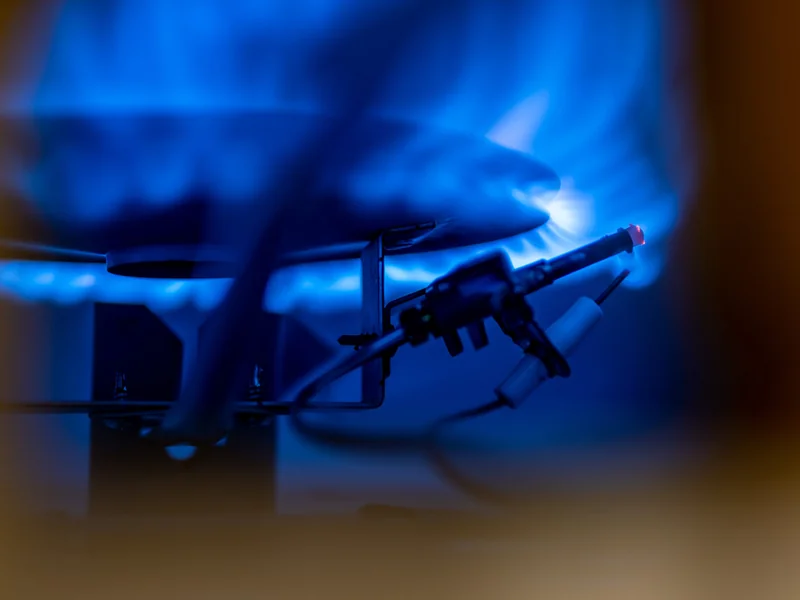
The gas control valve is the brass-bodied unit mounted low on the front of a gas water heater, the single point where the gas supply line, the pilot tube, and the thermocouple all converge. Inside that housing, a thermostat senses tank temperature through a probe seated in the tank wall and opens or closes the main burner valve to hold the setpoint. A separate safety circuit holds the pilot valve open only while the thermocouple — or thermopile on some models — generates its small millivolt signal from the pilot flame. If the pilot goes out, the signal dies and the valve snaps the gas supply shut. That fail-safe is what makes these valves trustworthy, and it is also why a dying thermocouple so often masquerades as a bad valve: the symptom looks identical until it is tested.
Most heaters built in the last two decades use FVIR (flammable vapor ignition resistant) designs, which seal the combustion chamber and add a thermal cutoff device into the assembly. On those units, a tripped thermal cutoff or a clogged flame-arrestor intake screen can mimic valve failure, so diagnosis has to rule those out before any parts are ordered. Replacement itself is precision gas-fitting work. We shut off the gas at the supply cock, close the cold-water inlet, and drain the tank below the valve port. Then we disconnect the gas supply line, the pilot tube, the thermocouple, and the igniter wire, and unthread the old valve from the tank spud. The new valve threads in with approved pipe sealant, every connection is remade, and then comes the step that matters most: the gas line is tested with leak-detection solution at full line pressure, the pilot is lit and observed for a steady envelope around the thermocouple tip, and the burner is run through complete heat cycles while we verify flame character, draft at the vent, and correct shutoff response at the thermostat. This is not a homeowner task — gas connections demand trained hands and proper testing.
Gas Safety: What to Do (and Not Do) Around a Suspect Valve
If you smell gas — the sharp rotten-egg odor of mercaptan — anywhere near your water heater, do not touch the valve, do not light anything, and do not flip electrical switches. Leave the house and call your gas utility's emergency line from outside, then call us. For a valve that simply misbehaves — a pilot that will not stay lit, a burner that short-cycles — turn the control knob to the off or pilot position and keep the area clear until a technician arrives.
Never attempt to disassemble a gas control valve. The internal seals, springs, and regulators are factory-set, and there are no field-serviceable parts inside the housing. Combustion air matters as well: a gas heater crowded into a small closet or a basement corner packed with storage can starve for air, causing sooting and carbon monoxide risk that looks exactly like a valve problem. After every valve replacement, we confirm the vent is connected and drafting properly, because a disconnected or back-drafting flue can spill combustion gases into the home. One more hard rule: any gas control valve that has been submerged in floodwater must be replaced, never dried out and reused. Water destroys the internal safety mechanisms even when the valve appears to work afterward, and we replace submerged valves as a matter of policy.
How a Gas Control Valve Fails on Waltham Heaters
The gas control valve is the brain of a gas water heater: it meters gas to the burner, holds the pilot, and shuts everything down if the thermocouple stops sensing flame. When it fails, the symptoms are specific — a pilot that lights but won't stay lit even with a new thermocouple, a burner that won't fire despite gas at the inlet, or a valve body weeping gas at the seams. In Waltham, 1890s–1920s mill-era triple-deckers and workers' housing, South Side Victorians, North Waltham 1950s ranches, and Brandeis/Bentley student rentals, we see control valves fail most often from age and from moisture: mill-era plumbing chases hide supply-line leaks inside walls that get blamed on the heater — pressure-test before quoting.
Diagnosis has to be methodical because the thermocouple, the pilot assembly, and the control valve share symptoms. We check gas pressure at the inlet, test the thermocouple's millivolt output, inspect the pilot flame quality, and only condemn the valve when the other parts test good. soft MWRA water (about 15–20 ppm hardness) here, so hard-water scale isn't the culprit — it's time, heat cycling, and environment. Replacing the valve means shutting off gas, disconnecting the pilot and thermocouple lines, swapping the valve body, leak-testing every joint with solution (never a flame), and relighting with a proper draft check.
Gas Safety Steps We Never Skip in Waltham
Gas control valve work has a safety sequence, and it doesn't get shortened for convenience. Gas off at the heater valve and verified at the inlet. The work area ventilated. Every disturbed joint leak-tested with detection solution after reassembly — and we recheck after the burner has cycled, because heat changes things. The pilot and main burner flames get a visual check for proper color and pattern, and the vent draft gets confirmed so combustion products actually leave the house. In Waltham, Charles River floodplain homes near Moody Street follow the submerged-heater replacement rule after flood events, which makes the draft check more than a formality.
There's a second safety layer most homeowners never see: the reason the valve failed. mill-era plumbing chases hide supply-line leaks inside walls that get blamed on the heater — pressure-test before quoting. If moisture from a tank-base leak or a damp basement killed the first valve, swapping in a new one without addressing the moisture just schedules the next failure. We look at what's around the valve — rust trails, mineral deposits, damp concrete — and say so plainly. North Waltham ranches carry crawl-space freeze risk on heater supply lines. A gas valve replacement done right leaves you with a safe burner and an honest read on the heater's remaining life.