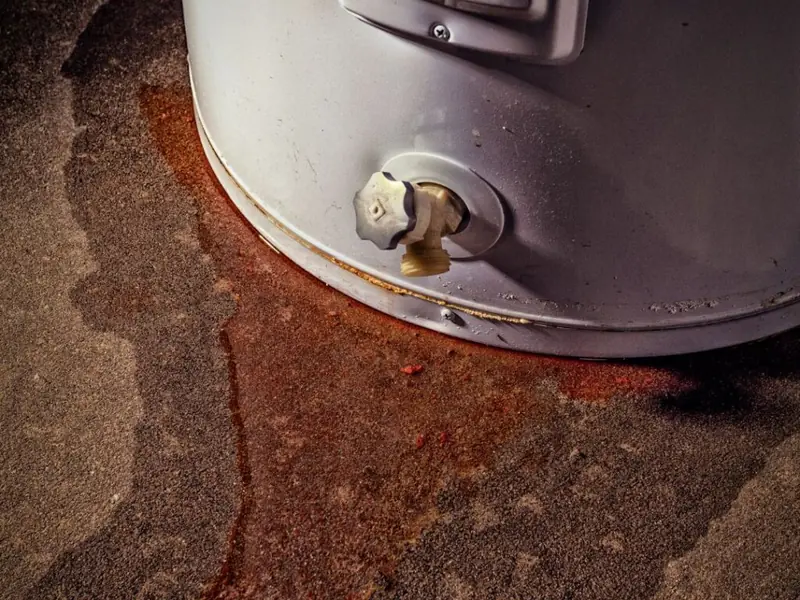
Water finds the lowest point in your house and it does not wait for business hours. When a water heater lets go in Winchester, MA 01890, forty or fifty gallons of hot water can be across a basement floor in under an hour, wicking into drywall, swelling subfloors, and feeding mold in wall cavities you cannot see. Our emergency water heater leak repair service exists for exactly that moment: a live answer at (833) 713-2101 any time of day or night, clear instructions for stopping the water yourself in the first ten minutes, and a technician dispatched to your Winchester home who arrives ready to diagnose, contain, and fix. Not every leak means a new tank. Corroded fittings, failed relief valves, and loose connections all mimic tank failure, and part of our emergency visit is telling you honestly which one you have before any work is quoted.
Tank Leaks vs. Fitting Leaks: Why the Distinction Saves You Money
Most emergency calls start with the same sentence: my water heater is leaking, I need a new one. Sometimes that is true. Often it is not. A tank that has rusted through the steel shell cannot be repaired; the pressure vessel is compromised and replacement is the only safe answer. But a surprising share of what looks like tank failure is actually a fitting failure at the top of the tank: a corroded dielectric union where copper meets steel, a weeping temperature-and-pressure relief valve, a loose or corroded hot-water outlet nipple, or a failed drain valve at the base. Each of these puts water on the floor that runs down the tank jacket and pools underneath, which looks exactly like a ruptured tank to a worried homeowner at midnight.
This distinction is worth real money, because a fitting repair is a service visit and a tank replacement is a major job. Our emergency diagnosis starts with drying and watching: where does the water actually originate? We check the top fittings with a dry hand and a flashlight, test the relief valve, inspect the drain valve, and only then assess the shell. If the tank has failed, we will tell you plainly and quote the replacement. If a forty-dollar fitting is the culprit, we will tell you that instead and fix it. Either way you get the truth first, because an emergency is the worst possible time to pay for work you do not need.
The First Ten Minutes: What to Do Before We Arrive
What you do in the first ten minutes matters more than anything we do in the first hour. Step one is to stop the water feeding the leak. On top of your water heater there is a cold-water shutoff valve on the inlet pipe; turn it clockwise until it stops. If that valve is seized, which is common on older installations, go to your home's main water shutoff instead and close it. This single action converts an active flood into a contained puddle, because the tank can only leak what is already inside it once the supply is cut.
Step two is to cut the heat. For a gas heater, turn the gas control valve to the pilot or off position. For an electric heater, switch off the dedicated breaker in your panel; never leave an electric tank powered while it drains, because exposed elements will burn out in seconds. Step three is damage control: move anything valuable off the basement floor, and if water is near electrical outlets or your panel, stay out of the standing water and tell us when you call. Then call (833) 713-2101. We will talk you through anything you are unsure about while the technician is on the way, because the phone call is part of the emergency service, not just the scheduling.
Emergencies at the Lakeside Price Point
Winchester's emergencies carry the town's price-point logic: finished basements are common, the damage stakes are high, and shutoff speed is the entire first-minutes strategy. Our emergency guidance is uncompromising: close the cold-water valve above the heater or the main, then call (833) 713-2101, and we walk you through anything unfinished while dispatching. In the 1920s to 1940s colonials, assume the heater's shutoff is seized and go to the main; we replace the failed shutoff during the repair visit as a matter of course.
The Mystic Lakes shoreline and Aberjona lowlands add the water-table emergency: basements that flood, heaters that go under, and the submersion rule applied absolutely. If your shoreline basement has flooded and the heater was in the water, do not restart it; the assessment is replacement. For heaters that stayed dry, the shoreline emergency includes the base-ring inspection, because high-water-table dampness is the year-round corrosion vector, and a base failure in a finished basement over groundwater is the worst-case combination this town offers.
No-Assumptions Diagnosis in a Partial-Supply Town
Winchester's partial MWRA supply reinforces the diagnostic discipline we apply everywhere but emphasize here: verify, do not assume. The emergency diagnosis traces the leak to its true source, fitting, valve, or shell, before quoting, and it assesses the tank's condition on evidence rather than on regional averages. In the older colonials, the fitting-first rule gets extra weight, because corroded unions and nipples on the original galvanized laterals mimic shell failure in exactly the buildings where replacement would be most expensive.
After the emergency, Winchester is a market that buys prevention: the pan with a drain, the smart automatic shutoff, and planned tank replacement on an honest timeline. We quote the package during the visit, because the finished basement makes the arithmetic obvious and the shoreline water table makes it urgent. The thirteen-village structure does not apply here, but the neighborhood variation does: we note the setting on intake, shoreline, lowland, or dry ground, because the environment determines the triage.
What Happens When You Call
When you call (833) 713-2101, day or night, you get a live person, not a voicemail. We take your address, ask where the water is and how fast it is spreading, and immediately walk you through shutting off the water and the heat source if you have not already. A technician is dispatched with a stocked truck: fittings, valves, pans, and common tank sizes. On arrival we contain, diagnose, and explain what we find in plain terms before any work begins. Fitting and valve repairs are completed on the spot; tank replacements are completed the same visit whenever the size is on the truck. We test everything, confirm hot water is back, and clean up the work area before we leave.
What Counts as a Water-Heater Emergency in Winchester
Not every drip is an emergency, and knowing the difference saves you a panicked call. A slow weep at a fitting with a dry floor around it can usually wait for a scheduled visit. What can't wait: water actively spreading across the floor, a tank leaking from the shell itself, a T&P valve discharging continuously, or any leak in a finished basement. In Winchester, finished basements are common at this price point — automatic shutoffs and sensors fit the market, so the line between 'annoying' and 'destructive' is thinner here than in a town of unfinished utility rooms.
Gas adds its own urgency. If you smell gas near the heater, leave the area and call the gas utility first — that's not a plumbing call, it's a safety call. A pilot that won't stay lit after a leak, or any sign the burner compartment got wet, means the heater stays off until it's inspected. Mystic Lakes and Aberjona shoreline homes combine high water tables with finished basements — the worst combination for a tank leak. When you call us for a genuine emergency, the first thing we do on the phone is walk you to the shutoffs: cold water in, gas valve off, and the T&P discharge kept clear. Those three moves contain most situations before we arrive.
Stopping the Leak Before We Arrive: Winchester Homeowner Steps
There is a lot you can safely do in the minutes before help arrives, and it makes a measurable difference to the damage. First, kill the water feeding the heater: the cold-water shutoff is usually a valve on the pipe entering the top of the tank — Mystic Lakes and Aberjona shoreline homes combine high water tables with finished basements — the worst combination for a tank leak, so know where yours is before you need it. Second, turn the gas control to 'off' or flip the breaker for an electric unit. Third, if water is actively flowing, thread a garden hose onto the drain valve and run it to the lowest drain you have.
What not to do matters just as much. Don't try to seal a tank-shell leak with anything — it won't hold and it wastes the minutes that matter. Don't touch the T&P valve to 'test' it during an active discharge; a continuous discharge means pressure or temperature is out of range and the valve is doing its job. And in Winchester, finished basements are common at this price point — automatic shutoffs and sensors fit the market, so move valuables and electronics off the floor early rather than mopping around them. When we arrive, tell us exactly what you shut off and what you saw — that history shortens the diagnosis.