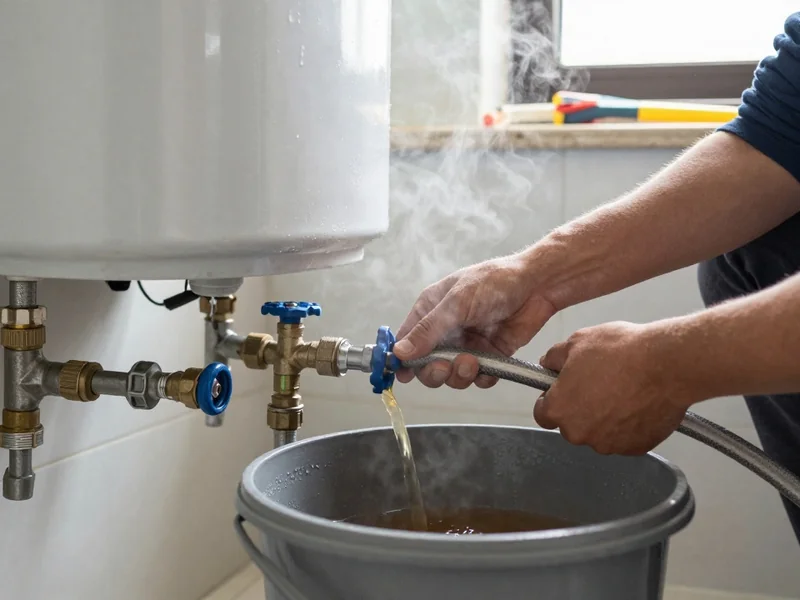
At the bottom of your water heater tank sits a small brass or plastic spigot that most Melrose, MA 02176 homeowners touch exactly twice in a tank's life: never, and then urgently. That is the drain valve, and it has two jobs. It lets a technician drain the tank for flushing out sediment, and it lets the tank be emptied for service or replacement. Factory-installed valves are often cheap plastic gate valves that go brittle with age and heat. They seize shut, snap off when forced, or weep constantly once disturbed. We replace failed drain valves with full-port brass ball-valve drains: a permanent upgrade that opens with a quarter turn, drains fast, and does not become the reason a simple flush turns into an emergency. If the valve on your Melrose tank drips, will not open, or will not close, the valve is the problem, and it is a fixable one.
Plastic Factory Valves vs. Brass Ball-Valve Drains
It helps to understand exactly what you are upgrading from and to. The factory plastic valve is a multi-turn gate or globe design: you spin the little handle many rotations, a stem rises, and water squeezes through a small, tortuous passage. Every turn grinds mineral deposits through the sealing surfaces. The plastic body gets brittle from constant heat exposure at the bottom of the tank, which is the hottest, most sediment-laden zone. After eight to twelve years, operating that valve is a gamble, and the stakes of losing are a valve stuck open on a full tank of hot water.
The brass ball-valve drain we install works on a different principle. A quarter turn rotates a polished brass ball with a full-size bore straight through it. Open means fully open, closed means fully closed, and there is no washer to wear out and no stem packing to weep. The full port matters for flushing: sediment chunks that would jam a plastic valve's narrow passage pass straight through a full-port ball valve, which is the difference between a flush that actually cleans the tank and one that just stirs the sediment around. Brass does not go brittle with heat, and a ball valve that sits untouched for five years still opens with two fingers. It is a permanent fix for a part that was designed to be disposable.
Sediment, Rumbling, and the Valve Connection
Drain valves and sediment are linked problems. Dissolved minerals precipitate out of hot water and settle on the tank bottom as sediment, and the drain valve sits exactly there, in the sediment zone. In a tank that has never been flushed, the valve's little bore packs solid with mineral mud. That is why so many first-time flush attempts fail: the homeowner opens the valve, gets a trickle, and concludes the tank is fine, when in fact the valve is clogged and the sediment is still in there baking onto the bottom.
Sediment causes its own symptoms. Rumbling, popping, or crackling during heating cycles is water trapped under a layer of sediment flashing to steam. That steam hammer stresses the tank and wastes energy, because the burner or elements are heating through an insulating blanket of mineral scale. A working full-port drain valve is what makes real flushing possible: with the tank drained through a wide-bore valve, sediment actually leaves instead of bridging across a narrow opening. When we replace a valve, we flush the tank as part of the job whenever the tank's condition warrants it, so you get both the repair and the maintenance in one visit. A quiet tank with a working valve is a tank that will run cooler, cheaper, and longer.
Valves in Crawl Spaces and Finished Basements
Melrose's drain valve work splits between two settings: the 1950s ranch crawl spaces, where the valve sits in an unconditioned void that freezes in January, and the finished basements of the older colonials, where draining must not touch finished surfaces. The crawl-space valves fail from a combination of age and environment: original plastic factory valves gone brittle, exposed to freezing air that makes the plastic even more fragile, in locations nobody visits until something goes wrong. Extraction in a crawl space is slow work, and the brass ball-valve replacement earns its keep twice over there: quarter-turn operation you can manage by flashlight, and brass that does not care about the cold.
In the finished basements, the job is containment first. We plan the hose route on the scheduling call, protect the path, and quote a plumbed drain pan with the valve as standard, because Melrose homeowners with finished lower levels understand the economics immediately. The older colonials add the galvanized-lateral footnote: seized shutoffs and corroded unions at the heater connections, which we inspect during the valve visit and usually recommend addressing in the same drained-down appointment.
Freeze Risk and the Preventive Visit
The January freeze pattern in Melrose's crawl-space ranches deserves its own attention, because it produces the city's most distinctive winter calls: no hot water in a cold snap, with the culprit being a freeze-split hot-water line near the heater rather than any tank problem. When we replace a drain valve in a crawl-space setting, we inspect the exposed piping runs and quote insulation and heat-tracing where the exposure warrants it. The valve replacement is the reason for the visit; the freeze protection is the reason there will not be a second visit in January.
Soft MWRA water keeps the long-term picture favorable: minimal scale means the new brass valve stays operable and flushing through the full-port bore genuinely clears sediment. We flush as part of every valve visit and show the homeowner the new valve working, because in a market that values maintenance, demonstrating the upgrade is part of the service. The goal for every Melrose valve job is the same: a heater that can be serviced, drained, and flushed for the rest of its life without another valve failure.
What Happens When You Call
When you call (833) 713-2101, describe what the valve is doing: dripping, seized, broken handle, or stuck open. We will tell you what not to touch before we arrive, because a half-open valve on a hot tank is not a DIY moment. On site, our technician shuts off water and power or gas to the heater, lets the tank cool to a safe temperature, and drains it through whatever function the old valve still has, or through the relief valve line if the drain valve is completely dead. We extract the old valve, clean and inspect the tank port threads, and thread in the new full-port brass ball-valve drain with proper sealant. Then we refill the tank, purge air from the hot water lines, restore heat, and test the new valve open and closed in front of you so you can see it work.
Why Plastic Drain Valves Fail in Melrose
Almost every tank water heater ships with a plastic drain valve, and that valve is the weakest fitting on the unit. Plastic threads gall, the small orifice clogs with the first chunk of sediment, and the handle snaps off in your hand the one time you actually need it — usually during a flush or an emergency drain-down. In Melrose, 1890s–1920s colonials and Victorians plus 1950s ranches and capes in the Highlands, we regularly find original plastic valves that haven't been touched in fifteen years, frozen solid, on tanks that otherwise still have life left.
Replacing it with a full-port brass ball valve changes the heater's serviceability completely. The larger bore drains sediment instead of clogging on it, the quarter-turn handle works even after years of disuse, and a hose threads on without a fight. high homeownership means planned replacement and efficiency upgrades land better than emergency-only messaging. It's a small part with an outsized effect: a heater with a working brass drain valve gets flushed, and a heater that gets flushed lasts longer. The valve is cheap; the maintenance it enables is what you're really buying.
The Drain Valve You Need for Emergency Drain-Downs
When a tank starts leaking in earnest, the first thing a technician does is drain it — and the first thing that fails is the plastic drain valve. In Melrose, high homeownership means planned replacement and efficiency upgrades land better than emergency-only messaging, so the difference between a controlled drain-down and a spreading flood often comes down to whether the valve works. A full-port brass ball valve opens with a quarter turn even after a decade of sitting, takes a standard garden hose without cross-threading, and passes sediment instead of clogging mid-drain.
That's why we recommend the valve upgrade on its own merits, not just during a flush. 1950s ranches with crawl spaces face real freeze-split risk on heater piping during January cold snaps. The replacement itself is quick: isolate the tank, relieve pressure, swap the valve, and test under pressure. If the existing valve is already weeping or the handle is broken, don't wait for the emergency — a weeping drain valve is also a slow leak onto the tank base, and finished basements are common, so leak stakes — and the case for pans and sensors — are high. One brass valve, and the heater is serviceable for the rest of its life.