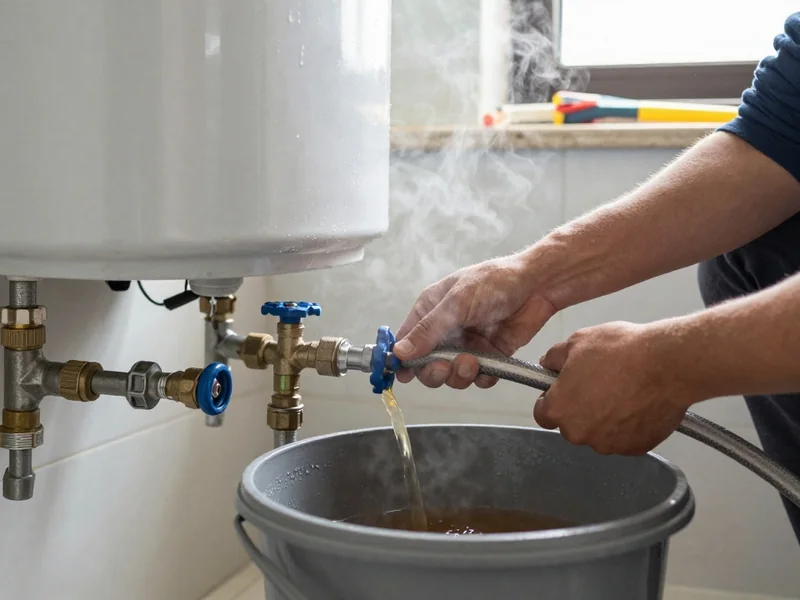
At the bottom of your water heater tank sits a small brass or plastic spigot that most Everett, MA 02149 homeowners touch exactly twice in a tank's life: never, and then urgently. That is the drain valve, and it has two jobs. It lets a technician drain the tank for flushing out sediment, and it lets the tank be emptied for service or replacement. Factory-installed valves are often cheap plastic gate valves that go brittle with age and heat. They seize shut, snap off when forced, or weep constantly once disturbed. We replace failed drain valves with full-port brass ball-valve drains: a permanent upgrade that opens with a quarter turn, drains fast, and does not become the reason a simple flush turns into an emergency. If the valve on your Everett tank drips, will not open, or will not close, the valve is the problem, and it is a fixable one.
Plastic Factory Valves vs. Brass Ball-Valve Drains
It helps to understand exactly what you are upgrading from and to. The factory plastic valve is a multi-turn gate or globe design: you spin the little handle many rotations, a stem rises, and water squeezes through a small, tortuous passage. Every turn grinds mineral deposits through the sealing surfaces. The plastic body gets brittle from constant heat exposure at the bottom of the tank, which is the hottest, most sediment-laden zone. After eight to twelve years, operating that valve is a gamble, and the stakes of losing are a valve stuck open on a full tank of hot water.
The brass ball-valve drain we install works on a different principle. A quarter turn rotates a polished brass ball with a full-size bore straight through it. Open means fully open, closed means fully closed, and there is no washer to wear out and no stem packing to weep. The full port matters for flushing: sediment chunks that would jam a plastic valve's narrow passage pass straight through a full-port ball valve, which is the difference between a flush that actually cleans the tank and one that just stirs the sediment around. Brass does not go brittle with heat, and a ball valve that sits untouched for five years still opens with two fingers. It is a permanent fix for a part that was designed to be disposable.
Sediment, Rumbling, and the Valve Connection
Drain valves and sediment are linked problems. Dissolved minerals precipitate out of hot water and settle on the tank bottom as sediment, and the drain valve sits exactly there, in the sediment zone. In a tank that has never been flushed, the valve's little bore packs solid with mineral mud. That is why so many first-time flush attempts fail: the homeowner opens the valve, gets a trickle, and concludes the tank is fine, when in fact the valve is clogged and the sediment is still in there baking onto the bottom.
Sediment causes its own symptoms. Rumbling, popping, or crackling during heating cycles is water trapped under a layer of sediment flashing to steam. That steam hammer stresses the tank and wastes energy, because the burner or elements are heating through an insulating blanket of mineral scale. A working full-port drain valve is what makes real flushing possible: with the tank drained through a wide-bore valve, sediment actually leaves instead of bridging across a narrow opening. When we replace a valve, we flush the tank as part of the job whenever the tank's condition warrants it, so you get both the repair and the maintenance in one visit. A quiet tank with a working valve is a tank that will run cooler, cheaper, and longer.
Valves That Nobody Has Touched in Twenty Years
The drain valves in Everett's triple-decker basements are among the most neglected we encounter: original plastic factory valves on tanks installed decades ago, in damp shared basements where no single tenant feels responsible for them. The failure pattern is consistent: heat-embrittled plastic, mineral-cemented washers from the building's own galvanized pipes, and external corrosion from the damp basement air, all conspiring so that the first touch in twenty years snaps the handle off. We arrive expecting extractions, not simple swaps, and we bring the tooling to remove a seized valve without damaging the tank port.
The brass ball-valve replacement changes the maintenance economics of these buildings. Quarter-turn operation, no washer to cement in place, a full-port bore that passes sediment instead of clogging: it is a valve that a landlord's maintenance person can actually operate during the next flush, which is the point. In the river-adjacent lowlands near the Malden and Mystic Rivers, where basements are flood-prone and water tables run high, we pair the valve with the standard damp-basement set: corrosion-resistant pan, tank elevation, and a sump pump check. The valve is the repair; the pan and elevation are what protect the investment.
Bulkheads, Parking, and Draining Fifty Gallons
Draining a tank in Everett's older neighborhoods is a logistics problem before it is a plumbing problem. Bulkhead-only access is common, the hose route often runs up the bulkhead stairs and out to a driveway or street, and narrow streets with tight parking mean the service van may not be at the curb. We plan the entire drain path on the scheduling call: where the hose goes, what it crosses, and how we protect finished areas along the way. In shared basements we confirm which heater is being serviced and label the new valve for the unit, because the next person to touch it should not have to guess.
Soft MWRA water is the technical advantage here. With minimal scale, the new brass valve stays operable indefinitely and flushing through the full-port bore genuinely clears the light sediment these tanks accumulate. We flush as part of the valve visit and demonstrate the new valve's operation before leaving, because in a building where the old valve was a twenty-year mystery, showing the owner or manager that the new one opens with two fingers is what converts a repair into maintained equipment.
What Happens When You Call
When you call (833) 713-2101, describe what the valve is doing: dripping, seized, broken handle, or stuck open. We will tell you what not to touch before we arrive, because a half-open valve on a hot tank is not a DIY moment. On site, our technician shuts off water and power or gas to the heater, lets the tank cool to a safe temperature, and drains it through whatever function the old valve still has, or through the relief valve line if the drain valve is completely dead. We extract the old valve, clean and inspect the tank port threads, and thread in the new full-port brass ball-valve drain with proper sealant. Then we refill the tank, purge air from the hot water lines, restore heat, and test the new valve open and closed in front of you so you can see it work.
Flushing Sediment Through a New Brass Valve in Everett
A drain valve replacement is also the moment to deal with what's sitting at the bottom of the tank. soft MWRA water (about 15–20 ppm hardness) in Everett, which keeps scale lighter than in hard-water towns — but sediment still accumulates from aging pipe, especially where industrial-era housing near the Malden River sits in corrosive damp basement air that attacks tank jackets and fittings. We see the evidence every week: tanks that rumble and pop during heating because a sediment blanket is insulating the bottom from the burner or lower element.
The service runs like this: shut off fuel and water, relieve pressure, thread on a hose, and open the old valve — or remove it if it's already failed. Once the tank is down, the new full-port brass valve goes in with proper thread sealant, and then we flush: short bursts of cold water stirred through the tank carry years of sediment out through the wide bore that a plastic valve could never pass. narrow residential streets with tight parking make bulkhead-only access the norm in Woodlawn and Glendale. We refill, purge air, relight or re-energize, and verify the new valve seats drip-free under full pressure.
Sediment, Rumbling, and the Everett Water Supply
Rumbling, popping, or a low growl from a tank water heater is the sound of water flashing to steam under a sediment blanket — and in Everett, soft MWRA water (about 15–20 ppm hardness), the sediment story is mostly about pipe, not supply. industrial-era housing near the Malden River sits in corrosive damp basement air that attacks tank jackets and fittings. That sediment settles on the tank bottom, insulates it from the burner or lower element, overheats the steel, and wastes fuel on every cycle.
Flushing only works if the drain valve cooperates, which is where most Everett heaters fail the test: the factory plastic valve clogs on the first real sediment load or snaps when you force it. narrow residential streets with tight parking make bulkhead-only access the norm in Woodlawn and Glendale. After the swap we flush in bursts — cold water in, sediment out through the wide bore — until the discharge runs clear. The rumbling usually stops on the next heating cycle, recovery improves, and the tank stops cooking its own bottom. It's the highest-value maintenance a tank heater can get, and it starts with a valve that actually opens.