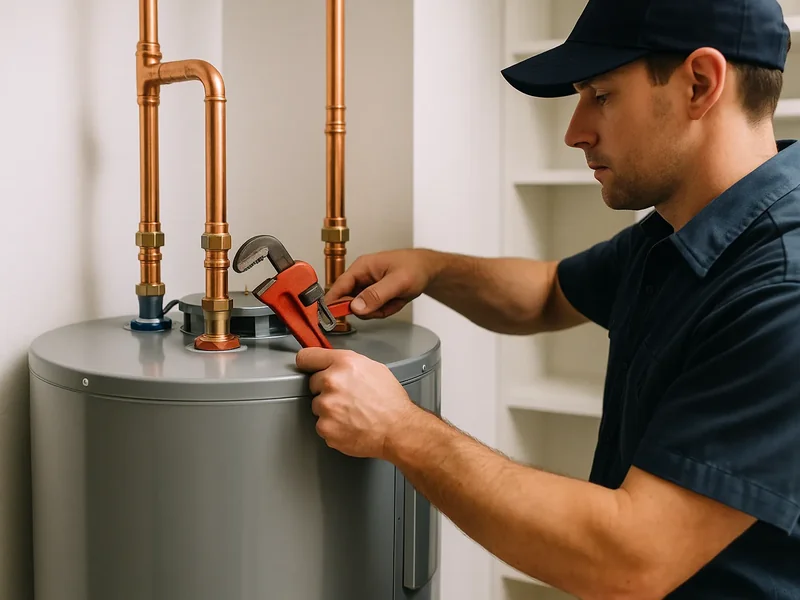
Repair it or replace it? It's the highest-stakes routine decision in water heater ownership, and most homeowners make it under pressure with incomplete information. This guide lays out the professional decision framework: the clear replace signals, the clear repair cases, the 50% rule and full cost math, the exceptions, and why a planned replacement beats an emergency one every time.
The Decision Every Heater Forces
Every water heater problem eventually funnels into one decision: repair it or replace it. The wrong call wastes money either way — repairing a dying tank throws good money after bad, while replacing a heater that needed a $200 part is pure waste. This guide gives you the decision framework professionals use, so you make the call with clear eyes instead of under pressure.
The Replace/Repair Lists
Replace when:
- The tank body leaks — water seeping from the shell, seams, or base. Not repairable, full stop. (See leak signs.)
- Age 12+ with any symptoms — rust, rumbling, reduced capacity; the tank is in systemic decline.
- Stacked repairs on a 10+ year unit — when the quote lists multiple components, compare the total to replacement.
- Efficiency gap is large — a decades-old unit vs. a modern high-efficiency replacement; energy savings narrow the price gap over time.
Repair when:
- Single failed component on a sound tank under ~10 years — element, thermostat, thermocouple, drain valve, anode rod, pilot assembly.
- External issues — expansion tank, pressure problems, or plumbing connections; these aren't the heater failing.
- Young unit, isolated fault — a 4-year-old heater with a bad thermostat is a repair, obviously.
The 50% Rule and the Full Math
The industry rule of thumb: if the repair costs more than half the replacement cost and the unit is past half its expected life, replace. In practice:
- Repair $ vs. replacement $: get both numbers, always. A trustworthy tech provides both without being asked.
- Remaining life: a $400 repair on a heater with 5+ years left is cheap; the same repair with 1 year left is expensive.
- Energy math: estimate a few years of operating-cost difference — it often tips close calls toward replacement.
- Risk cost: an old tank's failure mode is a flood; factor in the water damage risk of nursing it along.
- Opportunity: replacement lets you reconsider type (tank vs. tankless), size, and efficiency — options you don't get from a repair.
The Exceptions
Two scenarios where the default answer flips:
- Young heater, tank-body leak: rare, but it happens (manufacturing defect, freeze damage, installation error). If the unit is under warranty, the manufacturer may cover the tank — check before paying for replacement. The labor is still on you.
- Old heater, trivial repair: a 13-year-old tank with a weeping drain valve and no other symptoms can reasonably get the valve replaced — you're buying time, and time has value if a planned replacement is months away. Just don't mistake the reprieve for a cure.
Planned vs. Emergency Replacement
The most expensive replacement is the emergency one: winter night, no hot water, flooded basement — you take whatever unit is available at whatever price, with no time to consider efficiency or type. The cheapest replacement is the planned one: your 11-year-old heater shows early warning signs, you get quotes in spring, choose the right unit, and schedule the install. The entire prevention program exists partly to give you this luxury — catching decline early enough to replace on your terms.
If You Replace: Do It Right
When you do replace, don't just swap like-for-like blindly: confirm sizing matches your household's actual hot-water demand, consider efficiency upgrades, ensure the installation includes a proper expansion tank with correct charge, a drain pan where appropriate, and current-code venting and discharge piping. A replacement is a 10-year decision — the marginal cost of doing it right is tiny against a decade of service. And keep up the maintenance checklist from day one; the new heater's lifespan starts with its first flush.
Replacing on Your Schedule Beats Replacing in a Panic
The most expensive water heater replacement is the one that happens at 9 p.m. on a Sunday in February, with water on the floor and no hot water for the morning. Emergency replacements forfeit every advantage: no time to compare models, no time to get the sizing right, no time to address venting or pan drainage properly, and premium scheduling. The replacement still has to happen — it just happens worse.
Planned replacement flips all of that. When your heater crosses year 10, start the conversation on your terms: research the right size and fuel type for your household, get the installation done in mild weather when scheduling is easy, and bundle the improvements — expansion tank, drain pan with a real drain line, water alarm, accessible shutoffs — that turn a swap into an upgrade. A heater replaced at year 11 on a Tuesday morning costs less in every way than the same heater replaced at year 13 during a midnight emergency, even before counting the water damage the emergency caused.
Sizing and Fuel Choices When You Replace
Replacement is a rare chance to fix the sins of the original installation — starting with size. An undersized tank that never kept up with the household's morning showers shouldn't be replaced with the same undersized tank; check the first-hour rating against actual peak demand (showers, dishwasher, laundry overlapping). Oversizing has its own penalty in standby losses, so the goal is right-sizing, not maxing out.
Fuel type deserves a fresh look too, especially in Medford's older homes. A house that added a gas line since the electric heater went in, or a household whose usage patterns changed, may benefit from switching — but weigh the full conversion cost (venting, gas piping, electrical) against the operating savings, not just the unit price. And whatever you choose, verify the infrastructure: chimney flue condition for gas, panel capacity for electric, and combustion air for anything in a tight basement. The best heater on the market underperforms when the house around it wasn't ready.