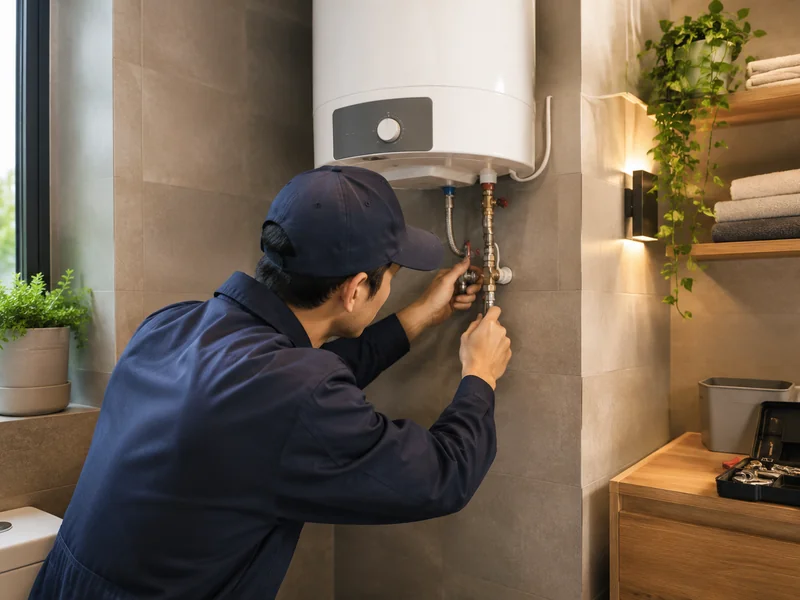
Water heater maintenance isn't complicated — it's a short list done on schedule. This is the complete checklist: every task a tank water heater needs, how often to do each one, which items are DIY and which belong to a pro, and the seasonal timing that makes it all work. Follow this list and you prevent the sediment, corrosion, and pressure problems behind most leaks.
The Complete Checklist (Bookmark This)
This is the complete maintenance checklist for a conventional tank water heater — every task, how often, and why. Print it, tape it inside the basement door, and work through it on schedule. Tankless owners: most of this applies, with descaling substituted for flushing and rod checks (see our tankless guide). For the seasonal timing of each item, see our seasonal care calendar.
Annual Tasks (Fall)
- Flush sediment — attach hose to drain valve, flush until water runs clear. (Twice yearly with older plumbing.)
- Test TPR valve — lift lever, confirm flow and reseal. (See TPR guide.)
- Check expansion tank — Schrader valve test (air, not water) plus air-charge vs. house pressure. (See expansion tank guide.)
- Inspect anode rod — every 3rd year (every 2nd with a softener). (See anode rod guide.)
- Gas units: clean pilot assembly, inspect burner and venting. (See pilot guide.)
- Electric units: verify element/thermostat operation.
- Verify thermostat at 120°F.
- Confirm shutoff knowledge — everyone in the house knows the inlet valve and breaker/gas shutoff. (See shutoff guide.)
Monthly Tasks (30 Seconds)
- Visual inspection — 30 seconds with a flashlight: moisture at base, rust streaks, crusty fittings, damp pan.
- Listen — new rumbling, popping, or hissing? Note changes. (See noise diagnosis.)
- Clear the area — keep two feet of clearance; storage creeps closer over time.
- Check water temperature at a tap — verify it matches the 120°F setting.
Seasonal Tasks
- Second flush (spring) — for older plumbing or heavy sediment.
- Winter monitoring — watch for pilot outages (gas) and new noises; keep the house at 55°F+ if traveling.
- Summer condensation check — wipe-and-watch to distinguish sweat from leaks. (See leak vs. condensation.)
- Vacation prep — vacation mode + inlet valve closed before trips.
- Leak alarm battery — if you have a water alarm at the heater (you should), test it yearly.
When the Checklist Finds a Problem
Maintenance isn't just prevention — it's early detection. Here's what to do when a checklist item fails:
- TPR valve doesn't reseat after testing: tap it gently once; if it keeps weeping, it needs replacement — don't leave a weeping TPR. See our TPR guide for the full diagnosis order (check the expansion tank before condemning the valve).
- Expansion tank fails the Schrader test (water instead of air): schedule a replacement — the system is running unprotected until it's fixed.
- Anode rod is down to wire: replace it now, not 'next year' — the tank is currently unprotected and every month counts.
- Flush water runs rusty or gritty: note it in your log and consider the twice-yearly flush schedule; persistent rust in flush water on an older tank is an early warning sign.
- Drain valve won't seal after flushing: replace the valve — a valve that can't be trusted can't do its job. See our drain valve guide.
- Any moisture you can't explain: run the wipe-and-watch test from our leak detection guide before assuming the worst — but don't ignore it either.
The checklist's real value is converting surprises into scheduled work. A failed item found in October is a service call; the same failure discovered as a flood in January is an emergency. Log every finding with its date — the log turns isolated observations into a trend line that tells you when the heater is entering its final years, giving you time to plan the replacement on your terms.
DIY vs. Pro: Splitting the List
The annual fall service is the one worth hiring out — a pro does the flush, rod pull, TPR test, expansion tank check, and burner inspection in one visit, with the tools and experience to spot trouble. The monthly 30-second checks are homeowner territory: look, listen, clear clutter. Splitting it this way keeps costs down and coverage complete. This is the routine behind our leak prevention guide — the checklist is the prevention program in actionable form.
Keep a Maintenance Log
Keep a simple log: date, what was done, and what was observed (rod condition, flush water clarity, pressure readings). When you eventually call for service or sell the house, that log is gold — it tells the tech exactly what they're working with and proves the maintenance history. Heaters with documented care also last longer in practice, because the log forces the schedule to actually happen.
What a Thorough Fall Service Visit Covers
A real annual service visit is a checklist, not a glance. Here's what thorough looks like: drain and flush sediment until the water runs clear; pull and inspect the anode rod (replace if depleted); test the TPR valve by lifting the lever and confirming it reseats cleanly; check the expansion tank's air charge with a tire gauge and top it up if low; verify the thermostat setting and ECO function; inspect the venting and draft hood on gas units for blockage, rust, or backdraft staining; check gas connections and the area around the unit with a combustible-gas detector; and confirm the drain pan, water alarm, and discharge routing are all in working order.
If a “service” skips the rod pull and the expansion tank check, it skipped the two items that most directly prevent tank failure — ask for them by name. The whole visit typically takes under an hour on an accessible heater, and it resets every wear clock that matters at once. Schedule it for September or October, before heating season loads the system.
Keep a Simple Service Log
Water heaters outlive most homeowners' memories of what's been done to them, which is why a one-page service log pays for itself. Tape an envelope or a zip-top bag to the side of the heater (away from the burner and flue) and keep in it: the install date and receipt, the model and serial number, the date of every flush, every anode rod inspection and replacement, every part replaced, and the name of whoever did the work.
This log does three jobs. It tells any future technician exactly where the maintenance stands — no guessing about the rod's age. It protects warranty claims, which often hinge on proof of maintenance. And if you sell the house, it hands the buyer documented proof of a cared-for heater instead of a shrug. In Medford's market of century-old homes changing hands, that envelope is a small but genuine selling point.