Water that's scalding no matter where the dial sits, or never quite hot enough — that's a thermostat problem. The thermostat is a simple part with an important job, and when it fails, the symptoms mimic element and gas-valve failures closely enough to cause expensive misdiagnosis. This guide covers the signs of thermostat failure, how to tell it apart from element problems, how replacement works on electric vs. gas units, and the 120°F rule.
What the Thermostat Controls
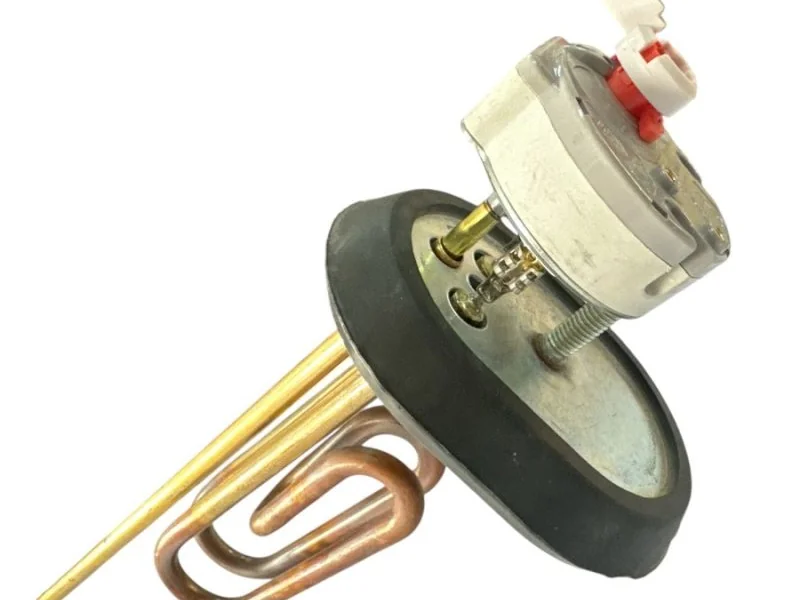
The thermostat is the heater's temperature brain: it senses water temperature and tells the heating source when to fire and when to stop. Electric heaters have two thermostats (upper and lower, paired with the two elements); gas heaters have the thermostat integrated into the gas control valve. When a thermostat fails, the heater either overheats the water, underheats it, or heats erratically — and overheating is a safety issue, not just a comfort one.
Signs Your Thermostat Is Failing
- Water too hot regardless of setting — the thermostat isn't cutting off the heat; check urgently, since scalding and TPR discharge follow.
- Water never gets hot enough — the thermostat cuts off too early or never calls for heat.
- Temperature swings — hot, then lukewarm, then hot; the thermostat is reading inconsistently.
- One thermostat's zone misbehaves (electric) — e.g., the upper portion heats but the lower never does, pointing at the lower thermostat/element pair.
- The high-limit reset keeps tripping — the safety is catching what the thermostat missed; don't just keep resetting.
Rule out the simple stuff first: verify the thermostat dials are actually set to 120°F (they get bumped), and on electric units, confirm the breaker hasn't tripped.
Thermostat vs. Element: Telling Them Apart
Thermostat and element failures share symptoms, so diagnosis matters — replacing the wrong part wastes money:
- Test with a multimeter. A tech checks continuity through the thermostat at temperature: it should open (cut power) when its sensor is hot and close when cool. A thermostat that stays closed when hot is failed.
- Check the paired element (electric). A good thermostat with a burned-out element produces 'no hot water' too — test both before replacing either.
- On gas units, thermostat failure means gas control valve replacement, since they're one assembly — which changes the economics considerably.
The pattern that points at the thermostat specifically: the heater heats (so elements/burner work) but the temperature is wrong or uncontrolled. If it doesn't heat at all, suspect the element or power first.
How Replacement Works (Electric vs. Gas)
On electric heaters, thermostat replacement is straightforward:
- Power OFF at the breaker — verified with a tester.
- Remove the access panel and insulation; note the wiring (photo it).
- Unclip the old thermostat from the tank wall — it must sit flush against the steel to sense temperature accurately.
- Clip in the new thermostat, ensuring full flat contact with the tank, reconnect wires, and set it to 120°F.
- Restore power and verify the heater cycles correctly.
The critical detail is contact: a thermostat that isn't flush against the tank reads air temperature instead of water temperature and behaves erratically — the most common cause of 'new thermostat, same problem.' On gas units, the thermostat is part of the gas valve assembly; replacement means a valve swap by a qualified tech.
The Right Temperature Setting: 120°F
120°F. It's the standard for good reasons: hot enough for showers, dishwashing, and laundry; cool enough to dramatically reduce scalding risk (especially for kids and older adults); easier on the tank and components; and lower energy use. Every 10 degrees above 120 increases scald risk sharply and accelerates tank wear. If your thermostat was set higher 'because the water wasn't hot enough,' the real problem was likely sediment or a failing component — fix the cause, don't mask it with temperature.
When Thermostat Failure Signals a New Heater
Thermostat replacement makes sense on a sound, mid-life heater. It stops making sense when the thermostat failure is one of several issues on an old tank — a thermostat plus an element plus visible rust is a replacement candidate, not a repair candidate. Run it through our replacement vs. repair framework. And whatever you decide, fold a thermostat check into your annual prevention routine — catching a drifting thermostat early prevents the overheating events that stress the whole system.
Gas vs. Electric Thermostat Failure Looks Different
Thermostat failure wears a different mask depending on fuel type. On electric heaters, a failed thermostat usually means no hot water or chronically lukewarm water — the element never gets the signal to fire, or one of the two thermostats sticks and throws off the upper/lower handoff. The ECO (emergency cut-off) reset button tripping repeatedly is the classic electric-thermostat distress signal.
On gas heaters, the thermostat is part of the gas control valve assembly, and failure looks like burner misbehavior: short-cycling (burner fires for a minute, shuts off, fires again), water that overshoots the set temperature, or a burner that won't fire at all despite a healthy pilot. Because the gas thermostat and gas valve are one integrated unit, thermostat replacement on a gas heater effectively means gas valve replacement — a different job, with different considerations, than swapping an electric thermostat.
The 120°F Setting in Real Households
The widely recommended 120°F setting isn't arbitrary — it's the balance point between scald safety and usable hot water. At 140°F, water scalds adult skin in seconds and a child's in far less; at 120°F, the margin is far more forgiving. In homes with small children or elderly residents, that margin matters enormously, and a thermostat that drifts upward with age quietly erases it.
The objection is always the dishwasher: doesn't it need hotter water to sanitize? Modern dishwashers heat their own water internally, so 120°F at the tap is fine. If someone in the house genuinely needs hotter water for a specific use, the correct answer is a thermostatic mixing valve — it lets the tank run hotter while delivering tempered 120°F water to the taps. Cranking a failing thermostat past its calibration to fix lukewarm water is how scald injuries happen; fix the thermostat instead.