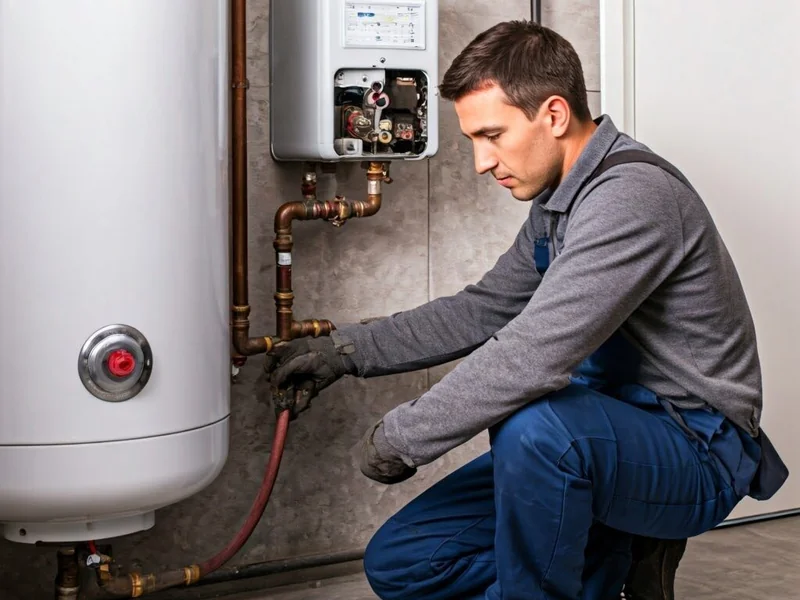
Your water heater works hardest in winter, sweats in summer, and deserves attention at the transitions between. A seasonal care calendar matches each maintenance task to the season when it matters most — instead of one generic 'annual service' that ignores what the heater is going through. This guide maps the full year for Medford's climate: what to do each season and why.
Why Water Heaters Need a Seasonal Calendar
Water heaters don't experience all four seasons equally — they work hardest in winter, sit humid in summer, and benefit from service at the transitions. A seasonal care calendar matches maintenance to what the heater is actually going through. Here's the year, mapped for Medford's climate.
Fall: The Annual Service (Do Everything Here)
This is the big one — the annual service visit. Before the heating season:
- Flush sediment from the tank (drain valve check included — confirm it flows and seals).
- Inspect the anode rod — pull it every third fall, or every second fall with a softener. See our anode rod guide.
- Test the TPR valve — lift the lever, confirm flow and reseal.
- Check the expansion tank — Schrader test plus air-charge verification. Details in the expansion tank guide.
- Gas units: clean the pilot assembly, inspect the burner, verify venting is clear.
- Electric units: check element and thermostat function.
Fall service means the heater enters winter clean, protected, and verified — when cold inlet water and peak demand hit, it's ready. This is also the time to confirm you know your emergency shutoffs before you need them.
Winter: Monitor, Don't Dismantle
Winter is monitoring season, not maintenance season — you don't open up a heater that's working its hardest. Instead:
- Listen monthly. New rumbling or popping means sediment is shifting; note it for the spring flush.
- Watch for pilot outages on gas units — winter downdrafts are the prime suspect. Our pilot guide covers diagnosis.
- Check the area around the heater stays dry — winter condensation on cold pipes can mask real drips, so wipe and re-check. See leak vs. condensation.
- Don't let the house get too cold if you travel — keep heat at 55°F minimum so pipes (and the heater's own plumbing) don't freeze.
If the heater fails mid-winter, treat it as urgent — no hot water in a Medford January is an emergency even without flooding. See is it an emergency?
Spring: The Second Flush and Damage Check
- Second flush for homes with older plumbing or heavy sediment — spring clears what winter's hard work deposited.
- Inspect for winter damage: check fittings and valves for weeping that started under winter pressure cycling.
- Review the heater's age and condition — spring is the comfortable season to plan a replacement if the unit is aging, rather than waiting for a winter failure to force the decision.
- Test the TPR valve again if it wasn't done in fall — twice a year is not excessive for this safety device.
Summer: Condensation Watch and Vacation Prep
- Expect condensation. Warm humid air on a tank full of cold water produces surface moisture — wipe it, verify it's not a real leak with our leak vs. condensation guide, and don't panic.
- Verify drainage paths are clear — the TPR discharge pipe and any drain pan outlet should run free; summer is when you discover a clogged pan drain.
- Tankless owners: summer's lower demand is the convenient window for annual descaling.
- Before vacation: set the heater to vacation mode and consider shutting the inlet valve — a leak that starts while you're away runs for days.
The Year at a Glance
The whole year in one line: fall = service, winter = watch, spring = flush and assess, summer = condensation and vacation prep. Put the fall service on the calendar now — it's the appointment that makes the other three seasons uneventful. And if any season reveals a problem you can't identify, our leak signs guide helps you read what the heater is telling you.
Heating Season Puts Your Water Heater to Work
A water heater's hardest months in Medford aren't summer — they're December through February. Incoming water temperature can drop 30 degrees or more between August and January, which means every shower and dishwasher load demands a far longer burner or element cycle to reach the same setpoint. Longer cycles mean more thermal expansion stress, more sediment baking onto the tank bottom, and more wear on every component per gallon delivered.
Then add the holidays: houseguests double hot-water demand for a week straight, right when the heater is already working its hardest. That combination is why heaters that were “fine” in October start weeping from the TPR valve or rumbling from sediment in January. The fall service visit exists precisely to get ahead of this curve — flush the sediment, verify the expansion tank charge, and confirm the thermostat setting before the season asks the heater for everything it has.
Leaving Town: Vacation Settings and Freeze Protection
Medford winters punish the “turn everything off and leave” approach. If you're away for a week or more in cold weather, use the heater's vacation mode (or its lowest setting) rather than shutting it down completely — it keeps the tank from deep temperature cycling and keeps some warmth in the surrounding pipes. More importantly, never drop the house thermostat below the mid-50s while you're gone; the water heater can't protect pipes in a 40-degree house.
For trips longer than a couple of weeks, the belt-and-suspenders approach is worth it: shut off the main water valve, open a faucet to relieve pressure, and have a neighbor or friend check the house mid-trip. A water alarm with phone alerts earns its keep here — it's the difference between a leak discovered in an hour and one discovered when you walk in the door two weeks later. Frozen-pipe bursts during vacation absences are among the most expensive water heater-adjacent disasters, and they're almost entirely preventable.