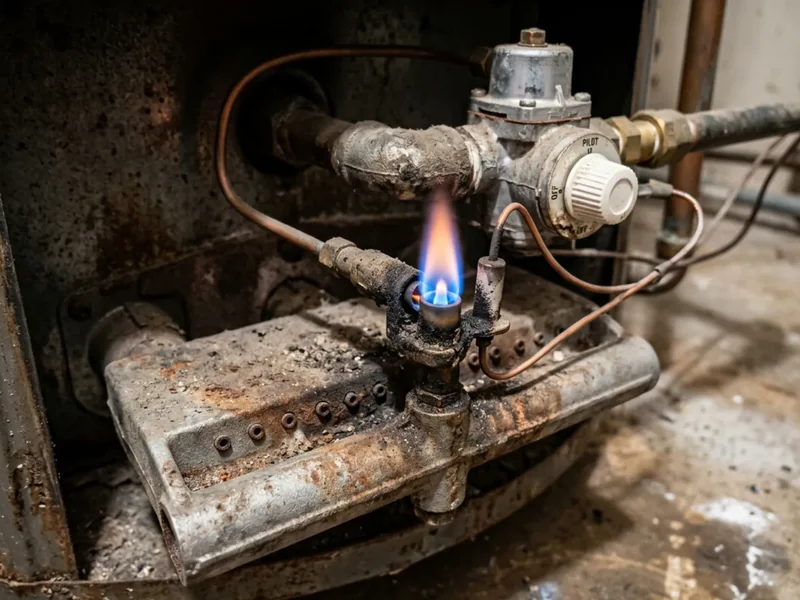
The gas control valve is the most complex part on a gas water heater and the most misdiagnosed. A pilot that won't stay lit, a burner that ignores the thermostat, water that's suddenly scalding — all of these get blamed on the valve, and sometimes the valve is innocent. This guide explains what the gas control valve actually does, the symptoms of real valve failure, how a technician tells valve problems apart from cheaper lookalikes, and when a failed valve means it's time for a new heater instead.
What the Gas Control Valve Does
The gas control valve is the brain of a gas water heater — it regulates gas flow to the burner based on the thermostat setting, runs the pilot safety circuit, and shuts everything down if the pilot goes out or the thermocouple fails. When it misbehaves, the symptoms look like half a dozen different problems, which is why this component gets misdiagnosed so often.
It's worth distinguishing control-valve problems from the tank issues that bring most people to our water heater leak repair page: a control valve doesn't leak water. But a valve stuck in a heating cycle can overheat the tank, trip the TPR valve, and create the pressure events that cause leaks. Understanding the valve helps you describe symptoms accurately when you call.
Classic Control Valve Symptoms
- Pilot won't stay lit — relights fine, then drops out hours later. Often blamed on the thermocouple when the valve's safety magnet is actually at fault.
- Burner won't fire despite a lit pilot — the thermostat side of the valve isn't calling for heat.
- Water too hot regardless of setting — the valve isn't throttling the burner; this is a safety concern, not just a comfort issue.
- Burner runs constantly or cycles oddly — short-cycling or never shutting off.
- Gas smell near the valve — shut everything down and treat this as urgent; don't troubleshoot gas leaks yourself.
If the problem is specifically the pilot, our pilot light problems guide goes deeper on the draft, thermocouple, and thermopile side of the equation.
How a Tech Diagnoses It (and How to Avoid Misdiagnosis)
Gas valve diagnosis is a process of elimination, and the order matters:
- Verify the pilot and thermocouple first. A weak pilot flame or failing thermocouple mimics valve failure — and it's a cheaper fix. Don't condemn the valve until these check out.
- Check the thermostat setting and its response. Turn it down and confirm the burner shuts off; turn it up and confirm it fires. A valve that ignores the dial is failing.
- Look for water. A leaking tank dripping onto the burner or valve assembly corrodes the valve from the outside. Sometimes the 'valve problem' is really a tank leak that needs addressing first.
- Note the heater's age. Gas control valves typically last the life of the heater; if the valve fails at year 11 on a 12-year-warranty tank, replacement of the whole unit often makes more sense than a valve swap.
Valve Replacement vs. New Heater: The Math
The gas control valve is one of the most expensive single parts on the heater, and the labor to replace it is significant. That makes the repair-vs-replace math important:
- Heater under 8 years, tank sound: replacing the valve is usually worthwhile.
- Heater 10+ years, any rust or weeping: put the money toward a new unit instead — you're buying a valve for a tank that's near the end anyway.
- Valve failure plus sediment or noise issues: the tank has multiple strikes; replacement wins.
Our replacement vs. repair guide walks through this decision in full. A straight answer on valve economics is part of every service call we make — we won't sell you a valve for a dying tank.
Safety Notes for Older Medford Basements
Two safety notes that matter in Medford's older housing stock. First, many basements have the heater sharing combustion air with a furnace or boiler in a tight utility room — restricted air causes the exact pilot and burner symptoms that look like valve failure, so the room's ventilation gets checked as part of diagnosis. Second, any gas valve work should include a leak check of the gas connections with the system pressurized. If you ever smell gas around the heater, don't wait for a diagnosis — get out, call the gas utility, then call us at (833) 713-2101.
Can You Prevent Control Valve Failure?
You can't prevent gas valve wear — it's an electromechanical part with a finite life. But you can avoid the conditions that kill valves early: keep the area around the heater dry (fix small leaks before they drip onto the valve), keep combustion air vents clear, and have the burner assembly cleaned during annual service so the valve isn't fighting a dirty burner. Valves that die young usually had help.
Gas Control Valves in Medford's Older Heaters
Medford basements hold a lot of heaters in the 15-to-20-year range, and their gas control valves live in a difficult spot: old enough that replacement valves for that exact model may be discontinued, young enough that the tank itself might still have life left. This is where the repair-or-replace math gets real. A valve that is still manufactured and stocked is a straightforward afternoon repair; a valve that has to be hunted down through obsolete-parts channels can cost more in time and money than the remaining life of the tank justifies.
Sediment is the quiet killer of older gas valves' surroundings — not the valve itself, but the burner and tank bottom beneath it. Years of scale insulate the tank bottom, the burner runs longer and hotter to compensate, and the whole combustion assembly ages faster. When a tech opens up an older unit for a valve issue, the condition of the burner chamber and tank bottom should be part of the verdict, not just the valve alone.
The Thermocouple Misdiagnosis
A large share of “control valve failures” turn out to be thermocouple failures. The thermocouple is the small sensor that sits in the pilot flame and tells the gas valve it is safe to stay open; when it weakens, the pilot won't stay lit, and the symptom looks exactly like a dead valve. A proper diagnosis tests the thermocouple's millivolt output before condemning the valve — a five-minute test that separates a minor repair from a major one.
Other pilot-killers get blamed on the valve too: a dirty pilot orifice starved of gas, a drafty basement blowing the flame off the sensor, or a corroded connection at the valve terminal. If a previous repair replaced the thermocouple and the pilot still won't hold, or the pilot flame looks weak and yellow instead of crisp and blue, the valve itself becomes the likelier culprit. The order of diagnosis matters: cheapest and most common causes first, valve last.