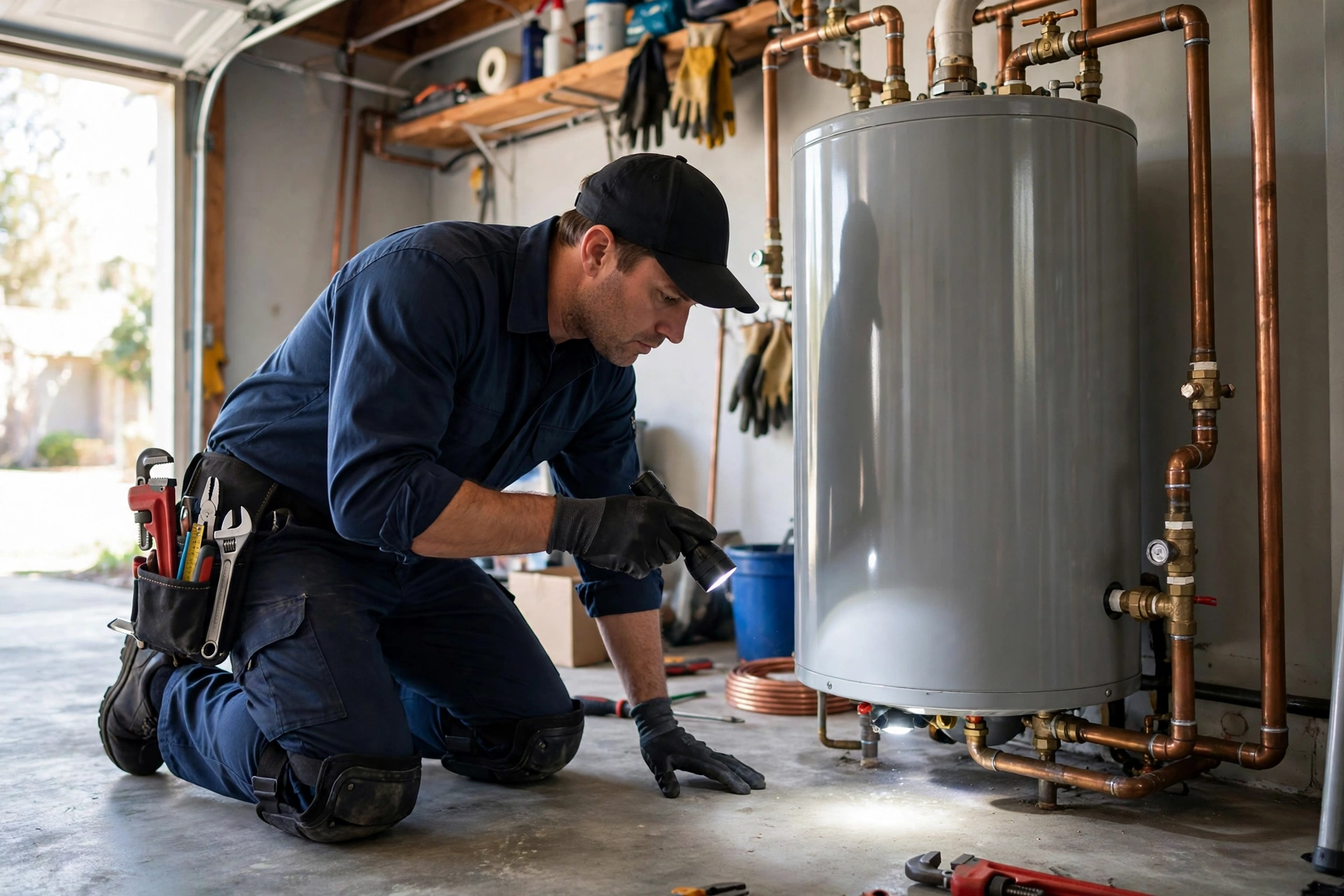
The pilot light is a tiny flame with an outsized job: prove it's safe to release gas to the main burner. When it won't stay lit, you have no hot water — and a short, logical list of causes to work through.
Relighting per the manufacturer's instructions on the heater label — that's it. Follow the steps exactly, including the waiting period. If it lights and stays lit, monitor it. If it won't light, won't stay lit after two careful attempts, or you smell gas at any point: stop, leave the area if you smell gas, and call a professional.
We test thermocouple output with a meter (not just replace-and-hope), inspect and clean the pilot assembly, check gas pressure, verify venting and combustion air, and evaluate the gas valve. The thermocouple is a cheap part, but shotgun-replacing parts without diagnosis is how a $30 fix becomes three $30 guesses.
Repeated thermocouple failures, a valve that needs frequent attention, or ignition trouble on a 10+ year unit often means the control system is telling you the heater is near end of life. Factor that into repair-vs-replace math rather than chasing the same symptom twice.
Modern gas water heaters have specific relighting instructions printed on a label near the gas control valve — always follow your model's instructions first. The general procedure: turn the gas control knob to "off" and wait at least 5 minutes for any accumulated gas to dissipate. This waiting period is critical for safety.
Turn the knob to "pilot," press and hold it down (or the pilot button), and use the igniter button or a long lighter to light the pilot. Continue holding the knob down for 30-60 seconds after the pilot lights to heat the thermocouple. Release the knob slowly — if the pilot stays lit, turn the knob to "on." If it goes out, wait 5 minutes and try again.
If the pilot won't stay lit after several attempts, the thermocouple is likely faulty. This is a common, inexpensive repair. Don't keep trying indefinitely — repeated failed attempts can indicate a gas supply issue that needs professional diagnosis.
Frequent pilot outages can indicate problems beyond a bad thermocouple. A cracked heat exchanger, blocked vent, or failing gas control valve can all cause pilot instability. If you've replaced the thermocouple and the problem persists, professional diagnosis is warranted.
On water heaters more than 10-12 years old, recurring pilot problems may be a sign the unit is reaching end of life. Internal corrosion and component wear make reliable operation increasingly difficult. Compare the cost of repeated service calls against replacement — a new unit eliminates the problem entirely and comes with a fresh warranty.
If you're tired of pilot light issues, consider that most new gas water heaters use electronic ignition instead of a standing pilot. Hot surface igniters or spark ignition systems eliminate the pilot entirely, improving both reliability and efficiency (no gas wasted keeping a pilot lit 24/7). When it's time to replace your water heater, electronic ignition is standard on most models.
Any water heater problem involving leaks, unusual sounds, or inconsistent hot water warrants prompt attention. Small issues become major failures if ignored. When in doubt, have a professional assess the situation.
Basic maintenance like flushing and visual inspections are DIY-friendly. Repairs involving gas, 240-volt electricity, or the tank itself should be left to licensed professionals for safety and code compliance.
Annual professional maintenance, regular DIY inspections, prompt attention to minor issues, and following manufacturer recommendations are the best prevention. Keep records of all maintenance performed.
